


TL;DR:
- Building a climate-conscious wardrobe involves choosing traceable, durable, and versatile pieces that prioritize repair and resale. Verifying brand claims with impact data and certifications like GOTS and OEKO-TEX is essential for credible sustainability. Focusing on circularity, longevity, reparability, and transparency reduces environmental impact and supports responsible fashion choices.
Build a small, high-quality capsule from traceable, low-impact materials, prioritize repair and resale, and verify every brand claim with published impact data and third-party certifications. That is the short answer. Here is how to act on it right now:
- Buy one versatile statement piece this season instead of three trend items.
- Choose one low-impact fiber per category: linen or TENCEL for warm months, responsible wool or organic cotton for cold ones.
- Register your garments for any repair or take-back program the brand offers before you need it.
The European Climate Pact frames circularity and traceable production as the baseline for credible climate action in fashion. When shopping, GOTS and OEKO-TEX certification marks are the fastest trust signals to scan for.
Table of Contents
- What does climate-conscious dressing in Europe actually mean?
- Which fabrics actually lower your climate impact?
- How do you build a capsule wardrobe for European climates?
- What care and repair habits actually extend garment life?
- How do you spot greenwashing before you buy?
- Why Room24’s Christelle dress is a useful climate-conscious example
- Key Takeaways
- Style with a conscience: why this matters more than the trend cycle
- Room24 makes climate-conscious style concrete
- Sources and further reading
What does climate-conscious dressing in Europe actually mean?
Four principles drive every good wardrobe decision: circularity, longevity, reparability, and transparency. Think of them as a filter, not a checklist.
Circularity means designing your wardrobe so nothing exits it as waste. Buy less, choose pieces built for reuse, and plan for resale or take-back from day one. The transition to sustainable fashion is fundamentally a shift away from seasonal, trend-based consumption toward circular design that keeps materials in use longer.
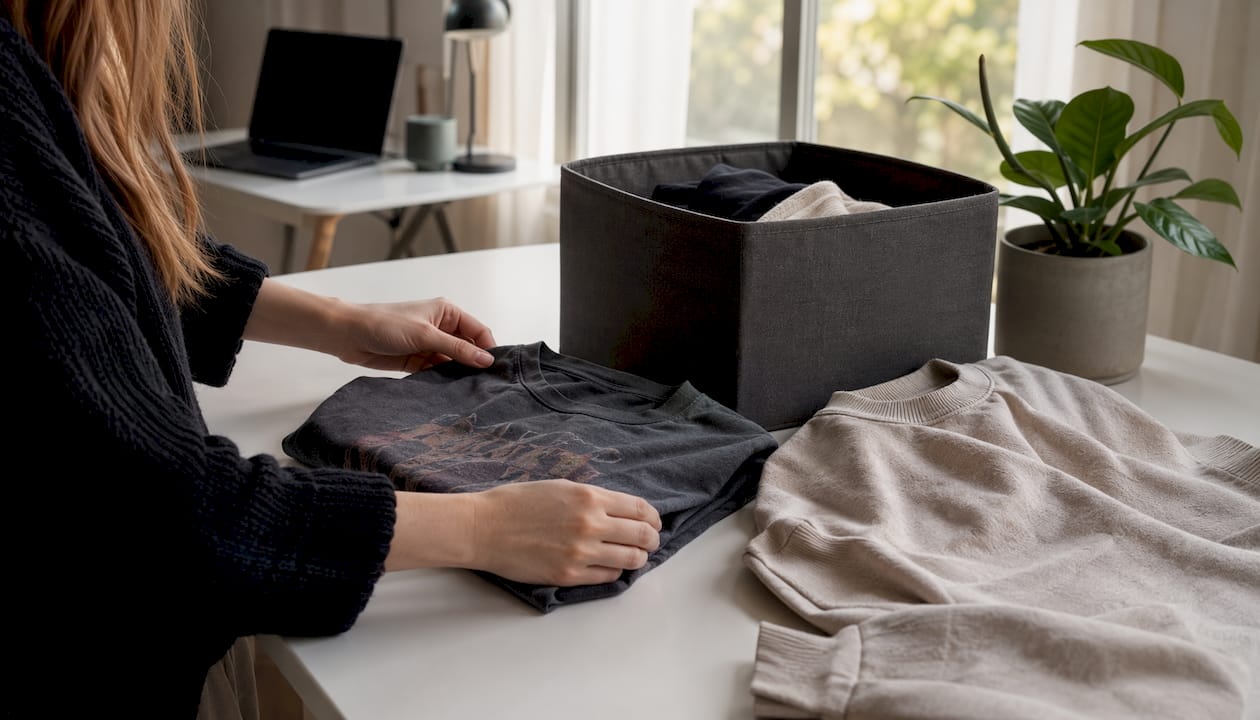
Longevity is measurable. A garment that survives five years of regular wear and multiple washes without losing its shape earns its environmental cost. Timeless silhouettes and quality construction are not aesthetic preferences; they are climate decisions.
Reparability means choosing fabrics and construction that can be mended. A French seam holds longer than an overlock. A natural-fiber knit can be redarned; a bonded synthetic cannot.
Transparency is where brands either prove their claims or expose them as marketing. Published factory locations, wage data, and product-level impact metrics (water, energy, carbon) are the verification signals that separate genuine progress from vague eco-labeling.
Pro Tip: Before buying, search the brand name plus “factory disclosure” or “impact report.” If nothing surfaces in two minutes, that absence is the answer.
Which fabrics actually lower your climate impact?
Choose traceable fibers and match the material to the garment’s intended lifespan and use. That single rule eliminates most bad purchases.
| Material | Environmental strengths | Key trade-offs | Best use |
|---|---|---|---|
| Linen | Low water, no pesticides, biodegradable | Creases easily, stiff until broken in | Summer dresses, shirts, trousers |
| TENCEL/Lyocell | Closed-loop processing, low water use | Requires gentle washing, can pill | Blouses, lightweight dresses, basics |
| Organic cotton | No synthetic pesticides, soft, durable | Still water-intensive vs. linen | Everyday basics, knitwear |
| Recycled polyester | Reduces virgin fossil feedstock | Sheds microfibers; use a Guppyfriend wash bag | Outerwear, activewear |
| Responsible wool (RWS) | Renewable, biodegradable, insulating | Animal welfare varies; verify RWS label | Midlayers, coats, knitwear |
| Plant leathers | Avoids animal hides and PVC | Durability varies widely by brand | Accessories, statement pieces |
For activewear specifically, natural-fiber alternatives to synthetic fabrics reduce both microplastic shedding and chemical load. Brands like Nilah Yogawear build their entire line around this premise, manufacturing in Europe with natural materials.
Certifications to request per material: GOTS for organic cotton and wool processing, OEKO-TEX Standard 100 for chemical safety across most fibers, Bluesign for responsible textile chemistry in synthetics, and the Responsible Wool Standard for animal welfare and land management.
How do you build a capsule wardrobe for European climates?
Aim for a compact number of pieces total, including shoes and outerwear. That number is small enough to know every item and large enough to dress for any occasion across Europe’s climate zones.
Northern Europe (Scandinavia, UK, northern Germany): Layer is everything. A merino or RWS wool midlayer under a structured coat handles October through April. Prioritize pieces that work both indoors and out so you are not carrying bulk.
Central Europe (France, Germany, Austria, northern Italy): Four distinct seasons mean you need genuine transitional pieces. A linen dress that layers under a blazer in September and stands alone in July earns its place twice over.
Southern Europe (Spain, Portugal, southern Italy, Greece): Breathable linens and light TENCEL pieces dominate eight months of the year. The challenge is eveningwear that travels light. A single strapless dress with a detachable layer solves this—one piece, two temperature ranges, three styling options.
For outfit versatility, a single statement dress styled three ways covers most travel scenarios: belted with flat sandals for daytime sightseeing, worn as-is with heels for dinner, and layered under a linen blazer for a cooler evening. Mixing two or three secondhand pieces with one new investment item is both financially and environmentally smarter than buying an entirely new seasonal wardrobe. European shoppers have strong secondhand infrastructure through platforms like Vinted and local vintage markets; U.S. shoppers can access European sustainable brands that ship internationally, though shipping emissions are worth factoring in.
What care and repair habits actually extend garment life?
Proper care and timely repair cut a garment’s lifetime emissions per wear more than any single purchasing decision. The math is simple: a dress worn 50 times has a fraction of the per-wear footprint of one worn 10 times.
- Wash less. Spot-clean between wears for most garments; full washes accelerate fiber breakdown.
- Cold wash (30°C/86°F or below) for almost everything. Hot water degrades elasticity and sets stains.
- Use a Guppyfriend wash bag for any synthetic or blended fabric to capture microfibers before they reach waterways.
- Air dry flat or on a hanger. Tumble drying shrinks natural fibers and weakens seams over time.
- Store knitwear folded, never hung, to prevent shoulder distortion.
For mending: patch small holes in knits immediately before they ladder. Reinforce stress points (pocket corners, button attachments) before they fail. A tailor is worth consulting for anything structural, like a broken zip or a lining that has separated. The cost of a repair is almost always less than 20% of a replacement garment’s price.
For resale, photograph items on a neutral background in natural light, describe fabric content honestly, and note any wear. Platforms like Depop, Vestiaire Collective, and eBay’s fashion category all have active European buyer bases. Upcycling is another option: a style-first upcycling guide can turn a dated piece into something genuinely wearable again.
Pro Tip: Set a calendar reminder six months after buying any garment to check seams, buttons, and fabric condition. Catching wear early costs minutes; ignoring it costs the garment.
How do you spot greenwashing before you buy?
“Radical transparency, not vague eco-labeling, is the definitive metric for credible sustainability. Brands should publish factory locations, wage information, and product-level impact metrics — not just a mission statement.” — European Commission
Demand traceable data and third-party verification. Marketing language alone tells you nothing.
Transparency signals to look for:
- Named factory locations and supplier audit results
- Wage statements or living-wage commitments with figures
- Product-level impact data: liters of water, kg of CO₂, energy per unit
- Third-party certifications with verifiable license numbers (GOTS, OEKO-TEX, Bluesign, RWS)
Red flags:
- Terms like “eco,” “green,” or “conscious” with no supporting data
- Carbon offsets cited as the primary sustainability action, with no product-level reduction data
- No certifications, or certifications that cannot be verified on the certifying body’s website
- A sustainability page that describes values but lists no measurable targets or outcomes
Good On You rates European brands across materials, labor, and environmental impact and is one of the fastest ways to cross-check a brand’s claims against independent analysis. The Marita Moreno brand, profiled by the European Climate Pact, uses third-party measurement via ZeroPact to quantify water, energy, and carbon per product — that level of specificity is the standard worth holding other brands to.
Why Room24’s Christelle dress is a useful climate-conscious example
Room24 positions itself at the intersection of design-forward style and mindful production, which makes it a concrete example rather than an abstract recommendation.
The Christelle Strapless Black Dress with Detachable Bolero illustrates several climate-conscious design principles at once. The detachable bolero effectively gives you two garments in one: a strapless silhouette for warm evenings and a covered option for cooler temperatures or more formal settings. That kind of built-in versatility reduces the number of pieces a traveler needs to pack, which directly reduces the wardrobe’s total footprint.
Three ways to style it: wear the full dress with the bolero for a structured dinner look; remove the bolero and add a linen blazer for a daytime event; pair the strapless silhouette with flat sandals and a tote for a relaxed evening in a Southern European city. One piece, three contexts, no redundant purchases.
For care: hand wash or cold machine wash in a mesh bag, air dry flat, and store on a padded hanger to preserve the strapless structure. Room24’s mindful-production approach covers sourcing and production transparency in more detail.
U.S. shoppers: Room24 ships internationally, so the Christelle dress and the broader collection are accessible outside Europe. Factor in shipping when calculating the total environmental cost, and consider consolidating orders.
Pro Tip: A detachable element (bolero, collar, belt) is one of the most underrated climate-conscious design features. It multiplies outfit options without multiplying garment count.
Key Takeaways
Climate-conscious dressing works when circularity, traceable materials, and verified brand transparency operate together, not in isolation.
| Point | Details |
|---|---|
| Build a compact capsule | Aim for a compact capsule; prioritize versatile, timeless silhouettes over trend items. |
| Choose traceable fibers | Match material to use: linen and TENCEL for warm months, RWS wool or organic cotton for cold ones. |
| Verify before you buy | Look for named factory data, wage statements, and GOTS, OEKO-TEX, or Bluesign certification numbers. |
| Care and repair first | Cold wash, air dry, and mend early; these habits cut per-wear emissions more than any single purchase swap. |
| Room24 as a style example | The Christelle Strapless Black Dress with Detachable Bolero demonstrates built-in versatility and mindful production. |
Style with a conscience: why this matters more than the trend cycle
The conventional wisdom in sustainable fashion is that you need to overhaul your wardrobe to make a difference. That framing is wrong, and it sells a lot of unnecessary “sustainable” product. The most climate-conscious wardrobe decision most people can make right now is to stop buying and start repairing what they already own.
Where purchasing is genuinely necessary, the principles here hold: traceable fibers, verifiable transparency, and designs built to last more than one season. Room24’s mindful-production ethos reflects that thinking. The Christelle dress is not marketed as a capsule piece because it is trend-proof by accident; the detachable construction is a deliberate design choice that extends the garment’s useful life across contexts.
The women driving change in sustainable fashion are not waiting for the industry to fix itself. They are making purchasing decisions that reward the brands doing the work and withholding money from those that are not. That consumer pressure, applied consistently, is what the role of women in sustainable fashion looks like in practice.
Room24 makes climate-conscious style concrete
Style-forward and sustainably minded are not opposites, and Room24 is built on that premise. The brand’s design approach prioritizes pieces that work across multiple occasions, reducing the need for a large wardrobe without asking you to compromise on how you look.
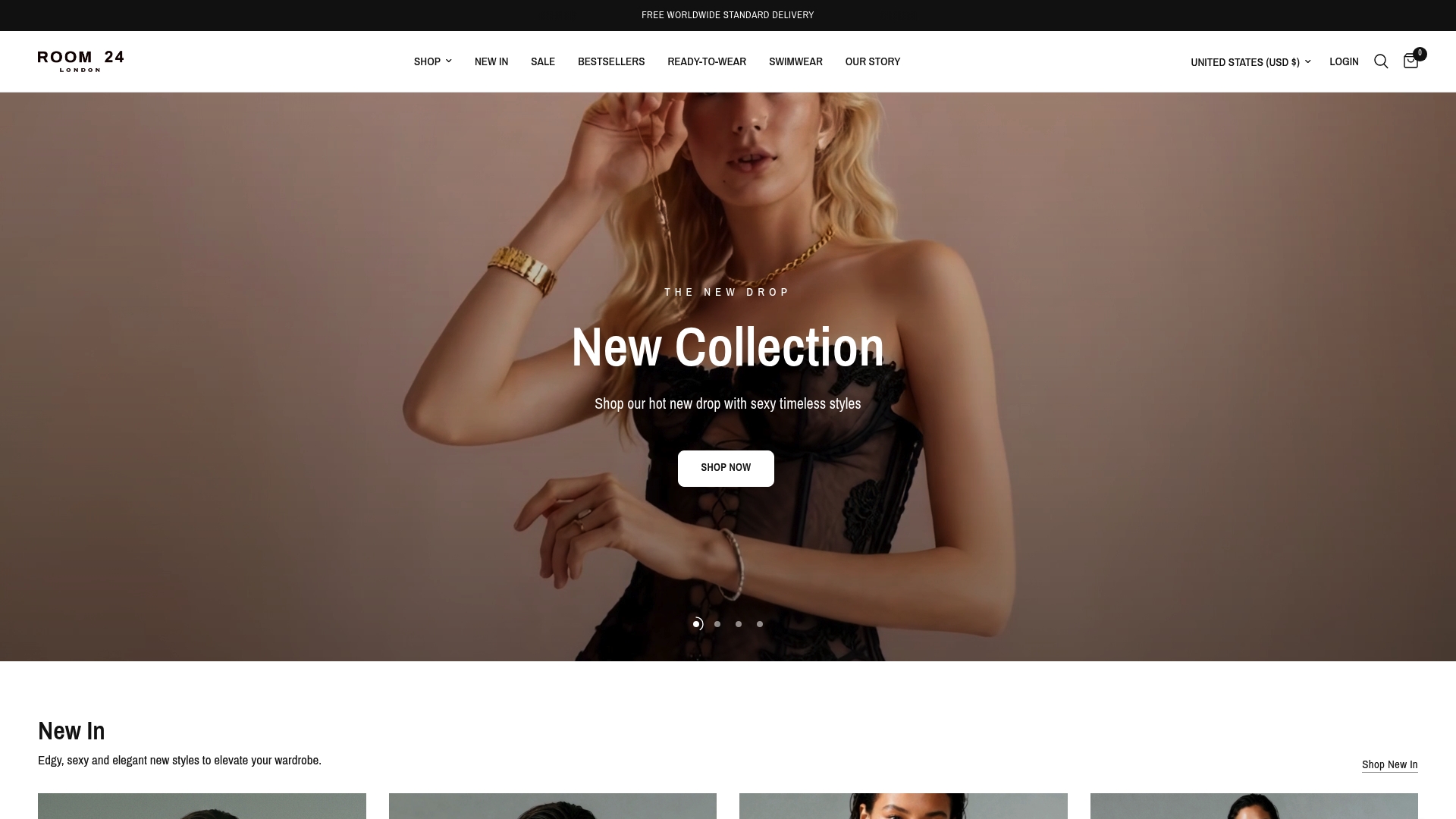
For a capsule that actually performs: a Room24 bodysuit works as a durable layering base under tailored trousers or a skirt, replacing three or four less-versatile tops. The Christelle dress handles eveningwear across climates with one piece instead of two. Both approaches reduce total garment count without reducing outfit range. Explore the Room24 bodysuits collection for pieces designed to anchor a climate-conscious capsule, and read the mindful-production write-up to see how the brand approaches sourcing and transparency.
Sources and further reading
Use these sources to verify certifications, check brand ratings, and go deeper on the regulatory and production context behind the guidance in this article.
| Source | What it covers |
|---|---|
| European Climate Pact | Circularity principles, local production, and data-driven impact assessment in fashion |
| Marita Moreno case study — European Climate Pact | Concrete example of traceability, local production, and third-party carbon/water measurement |
| Good On You — European brands | Independent ratings of European brands on materials, labor, and environmental impact |
| SustainYourStyle — Shop in Europe | Curated list of European sustainable brands with local manufacturing and circular design |
| Nilah Yogawear | Natural-fiber activewear made in Europe; useful reference for microplastic reduction |
| Room24 — Christelle dress | Product page for the Christelle Strapless Black Dress with Detachable Bolero |
| Room24 — Mindful production | Room24’s sourcing, production, and transparency approach |
For certification verification, go directly to the certifying body: GOTS at global-standard.org, OEKO-TEX at oeko-tex.com, Bluesign at bluesign.com, and the Responsible Wool Standard at textileexchange.org. Each maintains a public database where you can confirm a brand’s license number before purchasing.


