


A corset cinches the waist; a bustier lifts the bust. That single distinction drives every difference in how they’re built, how they fit, and when you’d reach for one over the other.
Spot the difference at a glance:
- Corset: longer torso coverage, pronounced waist curve, lace-up back, rigid steel boning, structured panels
- Bustier: shorter length, built-in cups or underwire, hook-and-eye front or back closure, lighter boning, looks like a longline bra
Both garments have roots in historical foundation wear, but today they serve very different styling purposes. A corset creates an hourglass silhouette through waist compression; a bustier shapes and lifts the chest with far less restriction below the ribs.
Key Takeaways
The core difference between a corset and a bustier comes down to where each garment does its work: the waist for a corset, the bust for a bustier.
| Point | Details |
|---|---|
| Core function differs | Corsets cinch the waist; bustiers lift and shape the bust. |
| Construction drives performance | Steel boning and lacing give corsets adjustability; lighter boning and hook-and-eye closures define bustiers. |
| Fit approach varies | Measure waist for corsets; measure underbust and bust for bustiers, as with bra sizing. |
| Style use cases | Corsets suit dramatic waist shaping and bridal; bustiers suit extended wear, outerwear, and bra replacement. |
| Room24 recommendation | The Kelly Corset and Room24 bodywear tops offer sculpting fits in sustainable materials for both silhouettes. |
Table of Contents
- What exactly is a corset?
- What exactly is a bustier?
- How corsets and bustiers are built differently
- How a corset and bustier should fit
- When should you choose a corset vs a bustier?
- Styling a corset or bustier: lingerie, outerwear, and occasion wear
- Are corsets and bustiers safe to wear?
- How to clean and store your corset or bustier
- Room24’s approach to corsets and bodywear
- The part most style guides get wrong about corsets and bustiers
- Room24 bodywear built for both silhouettes
- Sources
What exactly is a corset?
A corset is a structured, close-fitting garment designed to compress and reshape the waist, creating a dramatic hourglass silhouette. Its core purpose is waist shaping, though many wearers also find it supports posture when fitted correctly.
Corsets come in two main silhouettes:
- Overbust: covers the bust and torso from chest to hip; can be worn without a bra and functions as a standalone top
- Underbust: stops just below the bust, leaving the chest free; designed to be paired with a bra and works well layered under or over other garments
Construction hallmarks that define a true corset:
- Boning: typically steel (either flat or spiral) for rigidity and real waist reduction
- Panels: multiple structured fabric panels cut to create the waist curve
- Lacing: a lace-up back that lets the wearer adjust compression throughout the day
- Fabrics: sturdy materials like coutil, cotton twill, or satin that hold boning without distorting
Price reflects construction. Handmade or steel-boned corsets cost more because of materials and construction time, and that price usually correlates with durability and the ability to safely waist-train over time.
Pro Tip: New corsets need “seasoning” before extended wear. Wear it for one to two hours on the first few days, gradually increasing time and lacing tightness over two weeks. This lets the boning conform to your body and prevents discomfort or premature warping.
What exactly is a bustier?
A bustier is a shorter, structured top designed primarily to lift, shape, and support the bust while smoothing the upper torso. Think of it as a hybrid between a bra and a crop top.
Built-in cups or underwire are the defining feature, giving the bustier its bra-like function without requiring a separate undergarment. Typical construction includes:
- Cups or underwire: provide lift and shape directly at the bust
- Closures: hook-and-eye at the back or front, occasionally a zipper; no lacing
- Boning: lighter plastic or flexible boning for structure, or none at all in stretch versions
- Length: ends at or just above the natural waist, shorter than most corsets
- Straps: often detachable or convertible, making them useful as strapless tops or under off-shoulder styles
Bustiers are frequently sold as both lingerie and outerwear. Because they use stretch fabrics, satin, lace, or mesh, and lighter construction, they tend to be more comfortable for extended wear than a tightly laced corset. The trade-off is that they offer far less waist compression.
How corsets and bustiers are built differently
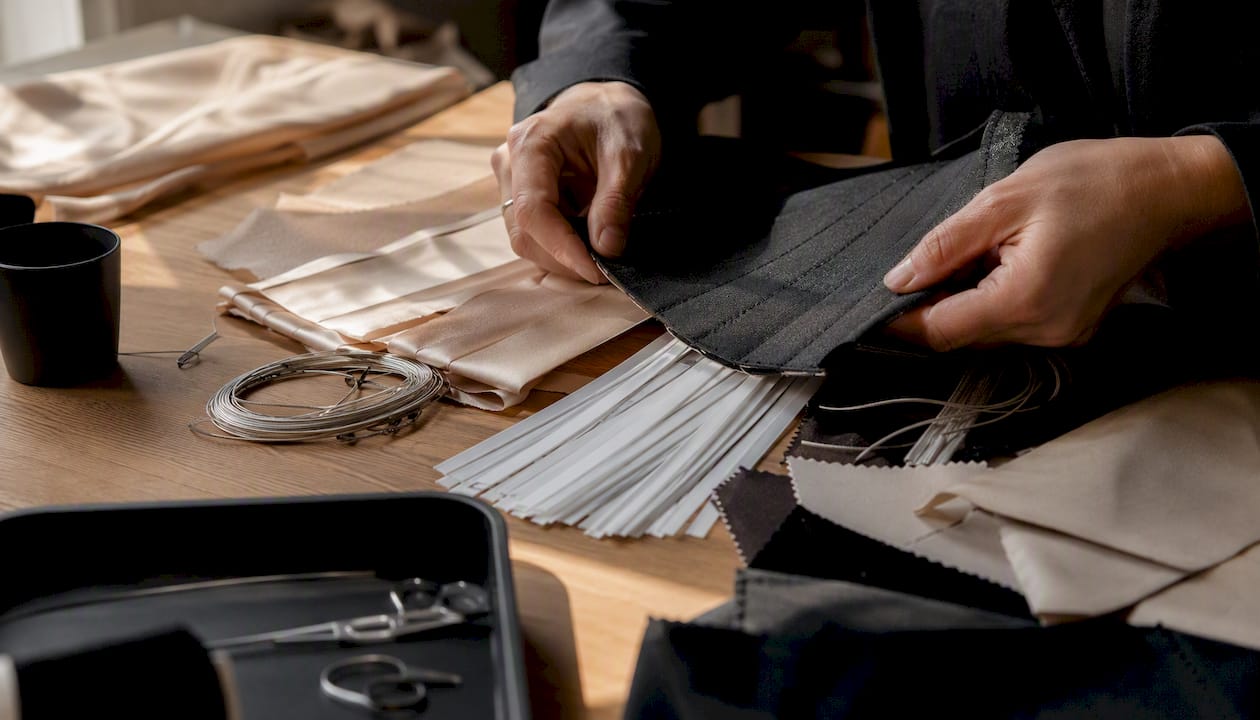
The construction contrast is the clearest way to predict how each garment will perform. A corset is engineered for rigidity and compression; a bustier is structured more like a bra.
| Feature | Corset | Bustier |
|---|---|---|
| Boning type | Steel (flat or spiral) | Plastic, flexible, or none |
| Closure | Lace-up back | Hook-and-eye or zipper |
| Cup/bust support | Overbust only; underbust has none | Built-in cups or underwire standard |
| Length/coverage | Hip to mid-torso or full torso | Ends at or just above the waist |
| Adjustability | High — laces allow daily fine-tuning | Low — fixed sizing at closure points |
| Typical fabrics | Coutil, cotton twill, brocade, satin | Satin, lace, mesh, stretch blends |
| Price range | Mid to high (especially steel-boned) | Entry-level to mid-range |
Steel boning gives corsets their rigidity; bustiers use lighter materials precisely because waist reduction isn’t the goal. Fabric choices reinforce this: corsets rely on sturdy wovens that hold boning without stretching, while bustiers use satin, lace, and mesh that drape and move with the body.
A few nuances worth knowing:
- Modern “corset tops” often mimic the lace-up aesthetic with minimal or plastic boning — they look like corsets but function closer to bustiers
- Some high-end bustiers include light steel boning for a firmer silhouette
- Hybrid pieces exist; read the construction details (boning type, closure, length) to predict actual performance
How a corset and bustier should fit
The right fit feels different for each garment, and getting it wrong is the most common reason people find them uncomfortable.
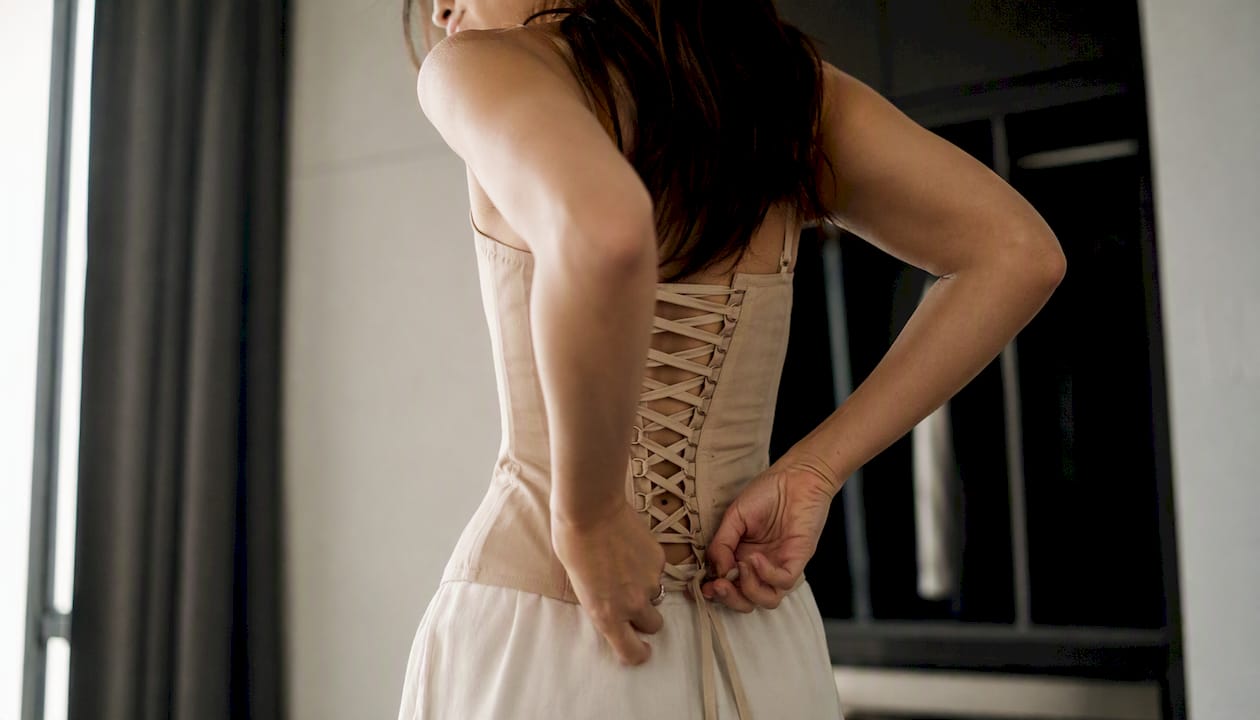
A well-fitted corset feels firm and supportive but never painful. You should be able to take a full, deep breath. At rest, two fingers should slide behind the laces at the back without forcing. If you can’t breathe comfortably or the boning digs into your hips, the corset is too small or too tightly laced.
A well-fitted bustier feels snug and secure, like a well-fitting bra. The cups should fully contain the bust without spillage, and the band should lie flat against the skin without riding up or digging in.
How to measure for each:
- Waist: measure at the narrowest point, usually 1 inch above the navel; this is the primary measurement for corsets
- Underbust: measure directly under the bust; critical for bustiers and underbust corsets
- Bust: measure at the fullest point; needed for overbust corsets and bustier cup sizing
- High hip: measure 3–4 inches below the waist; relevant for longer corsets that extend over the hips
For corsets, most sizing guides recommend ordering your natural waist measurement or 2–4 inches smaller if you plan to waist-train. For bustiers, follow standard bra sizing: band size from underbust, cup size from the difference between bust and underbust measurements.
Fit callout: Because corsets lace at the back, they offer genuine flexibility — you can loosen or tighten the laces for temporary size changes throughout the day. Bustiers use fixed hook-and-eye sizing with far less day-to-day adjustability, so getting the right size at purchase matters more.
Pro Tip: Always try a corset or bustier with the outfit you plan to wear it with. Bring the bra (or confirm you won’t need one), and wear the shapewear or undergarments you’d normally pair it with. A garment that fits perfectly over bare skin can feel completely different under a structured dress.
When should you choose a corset vs a bustier?
Pick by primary goal first: waist shaping points to a corset; bust support or cleavage points to a bustier. Then factor in comfort needs and how long you’ll be wearing it.
Choose a corset when you want to:
- Achieve significant, visible waist reduction
- Support posture during long events or photography
- Create a dramatic hourglass silhouette for bridal, editorial, or costume looks
- Waist-train gradually over weeks or months
- Wear a structured statement piece as outerwear
Choose a bustier when you want to:
- Lift and shape the bust without heavy compression
- Replace a bra under a strapless or low-back dress
- Wear something comfortable for a full evening out
- Style a lingerie-inspired top as outerwear with jeans or a blazer
- Have a versatile piece that converts from strapped to strapless
Pro Tip: An underbust corset paired with a well-fitting bra gives you the best of both: real waist compression plus proper bust support. This combination is often more comfortable than an overbust corset for all-day wear, and it’s easier to adjust if you need to loosen the lacing mid-event.
Styling a corset or bustier: lingerie, outerwear, and occasion wear
The high-level styling difference is straightforward: a corset is a structured focal piece, worn as a foundation or as the centerpiece of an outfit; a bustier functions as a versatile bra-top hybrid that moves easily between lingerie and outerwear.
Corset styling:
- Under formalwear: an overbust corset under a sheer or open-back gown creates a built-in silhouette without visible undergarments; bridal corsets are often custom-fitted to the dress
- As outerwear: a corset top over a fitted shirt or turtleneck is one of the strongest current styling moves; the layered look works with wide-leg trousers or a midi skirt
- Bridal and occasion: structured corset bodices in brocade or satin read as evening wear; pair with a full skirt for a dramatic silhouette
Bustier styling:
- Under a blazer: a satin or lace bustier under a tailored blazer with trousers is a clean, polished look that works from dinner to a night out
- With jeans: a stretch or lace bustier tucked into high-waisted jeans is the easiest way to wear one casually; add a leather jacket for edge
- Day-to-night: bustiers sold as outerwear often include detachable straps, making them easy to convert from a daytime layered look to a strapless evening piece
Dos and don’ts:
- Do pair an underbust corset with a supportive bra; the corset provides waist shaping, the bra handles the bust
- Do wear an overbust corset as a solo top when it’s designed for it; not all overbust styles offer enough bust support for every body type
- Don’t force a bustier to do waist-training work; the lighter boning isn’t built for sustained compression
- Don’t layer a corset over bulky fabrics; the rigid panels need a smooth base to sit cleanly
Wearing a bra under a corset or bustier is a personal choice. Some overbust corsets provide enough support on their own; underbust corsets are specifically designed to be worn with one.
Are corsets and bustiers safe to wear?
Worn properly, both garments are safe for normal use. The risks come from misuse: lacing too tightly, wearing for too long without breaks, or treating a fashion corset as a medical device.
Practical safety guidance:
- Never lace a corset so tight that you can’t take a full breath; if you feel short of breath, loosen immediately
- Start with light lacing and increase compression gradually over days and weeks
- Give your body rest days between corset sessions, especially during waist training
- Remove any garment immediately if you feel sharp pain, numbness, or skin irritation
- Avoid sleeping in a tightly laced corset
Common myths:
- “Corsets cause permanent organ damage” — historical tight-lacing over years caused problems; modern, properly fitted corsets worn for reasonable periods do not
- “Wearing a corset will make you lose weight” — corsets can support posture and temporarily reduce the waist, but claims of lasting weight loss should be treated cautiously and never assumed without gradual, supervised use
- “A bustier replaces a bra for all bust sizes” — bustiers vary widely in cup support; larger cup sizes may need additional support
Important: If you’re considering a corset for medical back support, consult a physician or physical therapist before purchasing. A fashion corset is not a medical-grade orthopedic device, and using one as a substitute for prescribed support can delay proper treatment.
How to clean and store your corset or bustier
Follow the garment label first. In general, spot-clean corsets and hand-wash bustiers; machine washing damages boning, structure, and trims on both.
- Spot-clean corsets after each wear using a damp cloth and mild soap on soiled areas; allow to air-dry completely before storing
- Hand-wash bustier panels in cool water with a gentle detergent; avoid wringing or twisting
- Dry flat for both garments; hanging a wet corset can distort the boning and warp the panels
- Reshape cups on bustiers while damp; press gently back into shape and allow to dry naturally
- Store corsets flat or loosely rolled with laces untied or loosely fastened; never compress under heavy items
- Store bustiers in a drawer or on a padded hanger; avoid folding cups inward, which creases the structure
Machine washing often damages structure and trims on corsets in particular. If a steel bone bends, you can sometimes straighten it carefully with pliers, but prevention is far easier than repair. For garments with delicate lace or embellishment, a mesh laundry bag and cold hand-wash is the safest option even when the label says machine-washable.
Room24’s approach to corsets and bodywear
Room24 designs corsets and bodywear tops with a clear priority: sculpting fits built from sustainable materials that work as hard as outerwear as they do as lingerie. The brand’s pieces are cut to create shape without sacrificing comfort, which means the construction choices — boning weight, panel placement, fabric selection — are made with real wear in mind, not just a hanger.
The Kelly Corset is a strong example of this approach. It delivers a defined waist and a clean silhouette that reads as a polished top, not a costume piece. The construction sits between a fashion corset and a structured top, making it genuinely wearable for dinner, events, or layered outerwear looks.
Room24’s bodywear tops collection also includes hybrid pieces that borrow from bustier construction — built-in structure, sculpting panels, and versatile styling options — without the formality of a traditional laced corset. These are the pieces to reach for when you want shape and lift but plan to be wearing them for hours.
- Choose the Kelly Corset or the Selma Corset when you want a defined waist and a statement silhouette
- Reach for Room24’s bodywear tops when you want bustier-level versatility with corset-inspired structure
- For hybrid outerwear-to-lingerie styling, the bodysuits collection bridges both categories cleanly
Pro Tip: If you’re unsure whether to go overbust or underbust, start with an underbust style. It pairs with any bra you already own, works under or over other tops, and gives you the waist definition without committing to a full-coverage silhouette.
The part most style guides get wrong about corsets and bustiers
Most comparisons of these two garments spend the bulk of their time on history and construction, then tack on a vague “choose based on your body type” conclusion. That framing misses the actual decision most shoppers face.
The real question isn’t which garment suits your body. It’s which garment suits your intention for a specific outfit on a specific occasion. A bustier worn under a blazer for a dinner reservation is a completely different use case than a corset laced for a bridal fitting. Treating them as interchangeable “shapewear options” leads to buying the wrong piece and then blaming the garment for not performing.
The other thing most guides understate: the hybrid market has genuinely complicated this. Corset-inspired tops with decorative lacing and plastic boning look like corsets but perform like structured tops. Bustiers with light steel boning and longer panels look like bustiers but offer more waist definition than the category usually promises. Reading the construction details — boning material, closure type, length, cup presence — tells you far more than the product name does.
My honest recommendation: start with function, not aesthetics. Decide whether you need waist compression or bust support, then find the garment that delivers that. The styling follows naturally once the foundation is right.
Room24 bodywear built for both silhouettes
If you’ve read this far, you already know what you need. The question is finding a piece that actually delivers it without compromising on quality or sustainability.
Room24 designs corsets and bodywear tops for women who want real shape, real comfort, and pieces that work beyond a single occasion. The Kelly Corset gives you a defined waist and a clean, wearable silhouette that holds up from dinner to a night out. The broader bodywear tops range covers the bustier-to-corset spectrum with sculpting fits and sustainable fabrics that don’t sacrifice structure for softness.
Every piece is designed to wear as outerwear, as lingerie, or as the foundation of a more complex look. No single-occasion pieces. Browse the Room24 bodywear collection and find the silhouette that fits what you’re actually trying to wear.


