


A bra style is the construction and cut that determines coverage, support level, and which outfits it works under. Get the style right and your clothes fit better, your silhouette looks sharper, and you’re not adjusting straps every twenty minutes.
Here’s where to start if you just need a quick answer:
- Everyday wear: T-shirt bra (smooth, molded cups disappear under fitted tops)
- Low-cut or plunging necklines: Plunge bra (low center gore, deep V front)
- Exercise: Sports bra (compression for low-impact, encapsulation for high-impact)
- Strapless or off-shoulder outfits: Strapless bra or adhesive/stick-on bra
- Lounging or light layering: Bralette or wireless bra
One thing worth knowing before you go further: fit matters more than style. The band carries most of the support load. Style determines shape and suitability for an outfit, but a poorly fitting band in any style will underperform.
Key Takeaways
Matching bra style to outfit and activity, then confirming fit with the five-point checklist, is the most reliable way to get comfort and support right across every situation.
| Point | Details |
|---|---|
| Style routes to outfit | T-shirt for fitted tops, plunge for V-necks, strapless or adhesive for off-shoulder, sports bra for workouts. |
| Fit over style | The band carries most support; it must sit level and the center gore must lie flat against the sternum. |
| Core wardrobe of five | T-shirt, plunge, full-coverage, sports, and strapless cover the majority of outfit and activity needs. |
| Rotate and replace | Rotating three or more bras extends each one’s life; replace when the band rides up on the tightest hook. |
| Room24 bralettes | Room24’s sustainable bralette collection offers sculpting, fashion-forward designs for light support and visible styling. |
Table of Contents
- Which bra style works for your outfit, body shape, and activity?
- How to choose the right bra: a practical fit checklist
- When do you need a specialty bra?
- What fabrics and care routines actually extend a bra’s life
- When a bralette makes sense for your wardrobe
- Sources
Which bra style works for your outfit, body shape, and activity?
The bra types guide at BraFinder maps each construction to support level, best-use scenarios, and typical size ranges. That framework shapes the catalog below. Each style is broken down by what it does, how much support it offers, who it suits, and what to wear it under.
-
T-shirt bra
- What it is: Molded, seamless cups with no lace or texture. The most popular everyday style.
- Support: Medium. Underwire in most versions; some wireless options available.
- Best for: All cup sizes. Particularly useful for AA–D cups under fitted tops, dresses, and knitwear.
- Styling tip: The smooth cup surface is the whole point. If you see rippling or puckering at the cup edge, size up.
-
Balconette bra
- What it is: Wide-set straps, a low, straight-cut cup that lifts and rounds the bust. Often has lace or decorative detailing.
- Support: Medium to high, depending on underwire construction.
- Best for: Fuller busts that benefit from lift and separation. Works well for D–G cups. Less ideal for narrow shoulders, since the wide-set straps can slip.
- Styling tip: Pairs well with square and boat necklines. The low cup edge can show under V-necks, so check coverage before wearing.
-
Plunge bra
- What it is: A very low center gore (the piece between the cups) and deep V-shaped cups. Designed to stay hidden under low-cut tops and dresses.
- Support: Medium. Underwire provides lift; the low center limits coverage.
- Best for: A–D cups. Larger busts may find the low center gore less supportive.
- Styling tip: The center gore must lie flat against your sternum. If it floats, try a larger cup size.
-
Full-cup bra
- What it is: Cups that cover the entire breast. Maximum coverage, often with a wider band and more substantial straps.
- Support: High. The go-to for DD+ cups and anyone who wants full containment.
- Best for: Larger busts, women who want minimal movement, and anyone spending long hours on their feet.
- Styling tip: Works under crew-neck tops, blazers, and button-downs. The higher cup line can show under scoop necks.
-
Demi-cup bra
- What it is: Cups that cover roughly half to three-quarters of the breast, creating a rounded, lifted silhouette.
- Support: Medium. Underwire lifts; the lower cup edge creates cleavage.
- Best for: A–D cups. Suits those who want a little lift without full coverage.
- Styling tip: A solid choice under scoop-neck tops. The exposed upper breast can show under very thin fabrics.
-
Bralette
- What it is: A soft, unstructured bra with no underwire and no molded cups. Often made from lace, modal, or stretch fabric.
- Support: Low. Relies on fabric stretch and band tension rather than underwire.
- Best for: A–C cups for primary support. D+ cups can wear bralettes for lounge or layering, but usually need a structured bra for long days or high-activity situations.
- Styling tip: Intentionally visible bralettes under sheer tops or open-back pieces are a strong styling move. Size down if the band feels loose, since there’s no underwire to compensate.
-
Sports bra
- What it is: Two main constructions: compression (presses the breast against the chest wall) and encapsulation (surrounds each breast in its own molded cup). Some hybrid designs do both.
- Support: Low to very high, depending on construction and impact level.
- Best for: Compression suits A–C cups for low-to-medium impact (yoga, walking). Encapsulation or hybrid designs suit D+ cups and high-impact activities (running, HIIT).
- Styling tip: For running or jumping, the Good Housekeeping textile lab found encapsulation designs consistently outperformed compression-only styles for larger cup sizes in durability and bounce reduction.
-
Strapless bra
- What it is: A bra with no straps, relying entirely on the band for support. Most have silicone grip strips along the top and bottom of the band.
- Support: Medium. Band fit is everything.
- Best for: A–D cups. Larger busts often find strapless styles slide down without additional support.
- Styling tip: Size down one band size from your usual fit. A snug band is the only thing keeping this in place.
Pro Tip: Before buying a strapless bra, do the reach-and-bend test in the fitting room: raise both arms overhead, then lean forward. If the band slides, go down a band size before trying a different style.
-
Adhesive or stick-on bra
- What it is: Cups made from silicone or fabric with a skin-safe adhesive backing. No straps, no band.
- Support: Low to medium. Provides shape and light lift; not suitable for high-impact use.
- Best for: A–C cups. Backless, strapless, or deeply cut garments where no traditional bra works.
- Styling tip: Clean, dry, and lotion-free skin is non-negotiable for adhesion. Reusable silicone versions last longer and are more eco-friendly than single-use options.
-
Push-up bra
- What it is: Angled padding at the base of each cup pushes breast tissue upward and inward to create cleavage.
- Support: Medium. The padding adds volume, not structural support.
- Best for: A–C cups who want enhanced cleavage. D+ cups risk “quad-boob” (breast tissue spilling over the cup edge) if the cup is too small.
- Styling tip: If you see a double-bubble effect at the top of the cup, size up in the cup immediately. Push-up padding is unforgiving when the cup is too small.
-
Minimizer bra
- What it is: Redistributes breast tissue across a wider area to reduce the projected bust measurement by roughly one cup size visually.
- Support: High. Full-coverage cups and strong underwire.
- Best for: DD+ cups who want a smoother silhouette under structured or tailored clothing.
- Styling tip: Minimizers work best under blazers, button-down shirts, and tailored dresses. The fuller cup can show under low-cut styles.
-
Longline bra
- What it is: A bra with an extended band that reaches down toward or past the rib cage, often with multiple hook-and-eye rows.
- Support: High. The wider band distributes weight more evenly.
- Best for: Fuller busts and anyone with back discomfort from standard bra bands. Also works as a fashion piece under high-waisted skirts or wide-leg trousers.
- Styling tip: The extended band can double as a crop top under blazers or open-front jackets.
-
Racerback and convertible bras
- What it is: Racerback straps meet at a center point between the shoulder blades. Convertible bras come with detachable, repositionable straps that can be worn straight, crossed, halter-style, or removed.
- Support: Medium to high, depending on construction.
- Best for: Racerback suits narrow shoulders and racerback tank tops. Convertible suits anyone who wants one bra to handle multiple necklines.
- Styling tip: A convertible bra is the most versatile single purchase for a travel wardrobe. One bra, four strap configurations.
How to choose the right bra: a practical fit checklist
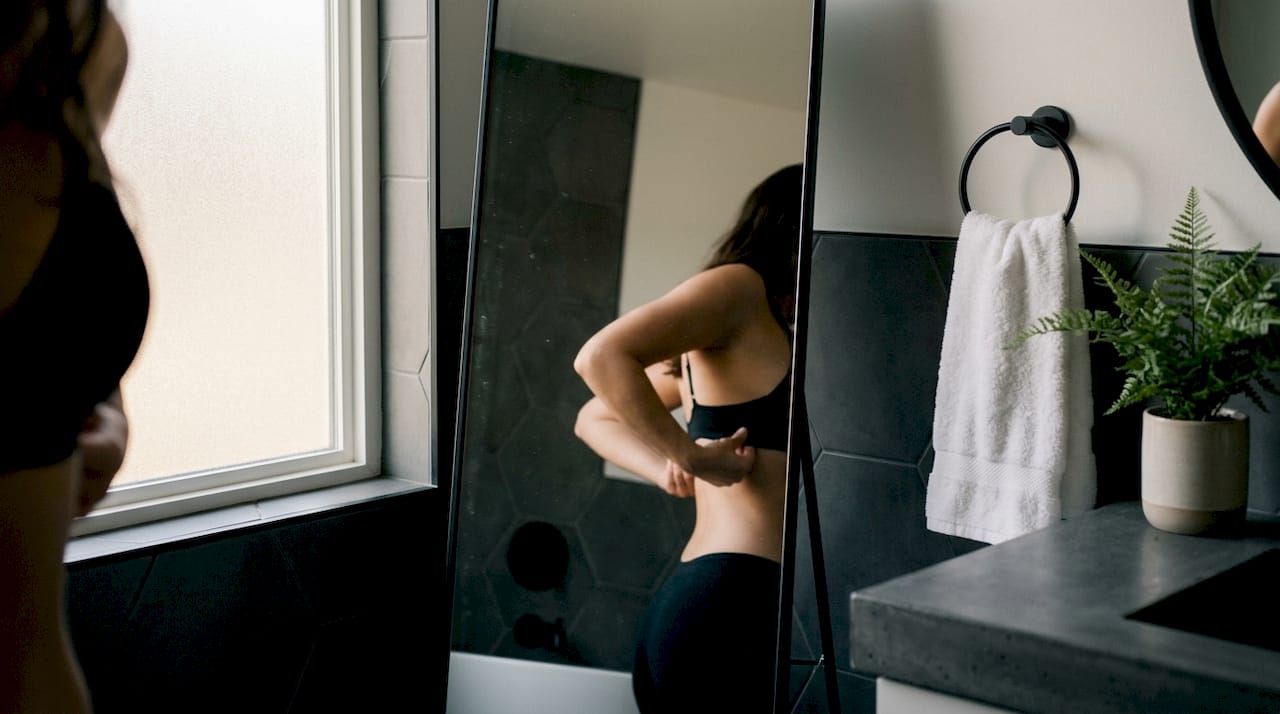
Pick the construction that matches your outfit and activity first, then confirm fit.
Outfit routing rules (quick reference):
- Fitted T-shirt or knitwear → T-shirt bra (smooth, molded cups)
- V-neck or plunging neckline → Plunge bra
- Scoop neck → Demi-cup or balconette
- Strapless or off-shoulder dress → Strapless bra or adhesive
- Racerback tank → Racerback or convertible bra
- Sheer or open-back top → Bralette (visible) or adhesive (invisible)
- High-impact workout → Encapsulation sports bra
- Low-impact workout or yoga → Compression sports bra or bralette
A fit-specialist guide recommends five core styles as the foundation most people need: T-shirt, plunge, full-coverage, sports, and strapless. Start there before adding specialty or fashion styles.
Fit checklist — run through this in-store or when trying on at home:
- Band: Should sit level all the way around, parallel to the floor. If it rides up in the back, the band is too loose.
- Cup fill: Breast tissue should fill the cup completely with no gaping, wrinkling, or spillage over the top edge.
- Center gore: The piece between the cups must lie flat against your sternum. If it floats, go up a cup size.
- Straps: Slide two fingers under each strap. They should resist slightly but not dig in. Straps that fall off the shoulder constantly mean the band is doing too little work.
- Rib-band test: Scoop and swoop — reach into each cup, pull all breast tissue forward and upward, then fasten the band on the loosest hook. This is your true fit. As the band stretches over time, you’ll move to tighter hooks.
Pro Tip: When sizing strapless bras, try one band size smaller than your usual fit. When sizing bralettes, consider that the lack of underwire means the band does all the work — if the band feels even slightly loose, size down.
When do you need a specialty bra?
Standard styles cover most situations, but certain life stages and activities call for something purpose-built. Oprah Daily’s editorial testing across 11 categories specifically identified winners for nursing, post-mastectomy, menopause, and high-impact sports, which signals just how different the requirements are.
-
Nursing bras: Drop-down or clip-open cups allow feeding without removing the bra. Look for soft, breathable fabric (cotton or modal) and avoid underwire in the early postpartum weeks, since pressure on milk ducts can cause discomfort. Sizing changes frequently in the first few months, so buy a few rather than a full wardrobe.
-
Post-mastectomy bras: Designed with internal pockets to hold breast prostheses securely. The pocket keeps the prosthesis in place during movement and prevents skin irritation. Fit from a certified mastectomy fitter at a specialty retailer whenever possible. The difference between a standard bra with a pocket sewn in and a purpose-built mastectomy bra is significant in terms of comfort and security.
-
Adhesive or backless bras: Covered above in the main catalog, but worth repeating for post-surgery or sensitive skin: silicone adhesive is generally gentler than fabric-backed options. Always patch-test on a small area of skin before full application.
-
High-impact sports bras: Encapsulation designs (each breast in its own molded cup) outperform compression-only styles for D+ cups during running, jumping, or HIIT. Look for adjustable straps, a wide underband, and moisture-wicking fabric. Replace when the band loses elasticity, not just when the fabric looks worn.
-
Pregnancy bras: Non-underwire or soft-cup designs accommodate rapid size changes and increased breast sensitivity. Many women go up one to three cup sizes during pregnancy. A maternity bra with extra hook-and-eye rows lets you adjust as your rib cage expands.
-
Front-closure bras: Useful post-surgery or for anyone with limited shoulder mobility. The clasp sits at the center front, eliminating the need to reach behind the back.
What fabrics and care routines actually extend a bra’s life
Material choice affects comfort, durability, and how long a bra holds its shape.
Common fabrics:
- Cotton: Breathable and gentle on sensitive skin. Less elastic than synthetics, so it can stretch out faster. Best for everyday wireless or sleep bras.
- Modal: Softer than cotton, holds shape better, and wicks moisture reasonably well. A strong choice for bralettes.
- Microfiber: Smooth, lightweight, and moisture-wicking. The standard for T-shirt bras. Durable under regular washing if cared for correctly.
- Mesh and power mesh: Breathable and supportive. Power mesh is firmer and used in the band and side panels of high-support bras. Regular mesh adds ventilation without structure.
- Lace: Decorative and delicate. Lace bras require hand washing or a mesh laundry bag on a gentle cycle. Lace degrades quickly in a hot dryer.
Padding types:
- Molded foam: Pre-shaped, holds its form, and gives a smooth silhouette. Can flatten with heat, so air-dry only.
- Removable pads: Common in bralettes and sports bras. Take them out before washing to prevent warping.
- Lightly lined vs. unlined: Lightly lined cups add a thin layer for nipple coverage without changing shape. Unlined cups show more natural contour and work well under structured outerwear.
Care checklist:
- Hand wash in cool water with a gentle detergent whenever possible. This is the single best thing you can do for bra longevity.
- Machine wash only in a mesh laundry bag on a delicate or gentle cycle. Never wash bras loose in a drum with jeans or towels.
- Air-dry flat or hang by the center gore, never by the straps. Heat from a dryer breaks down elastic and warps molded cups.
- Store bras cup-to-cup in a drawer, not folded in half. Folding crushes the molded cup shape permanently.
When to replace: A bra that rides up even on the tightest hook, cups that gap or wrinkle despite correct sizing, straps that won’t stay adjusted, or visible fraying at the underwire casing. Most bras last six to twelve months with regular wear and proper care. Rotating between three or more bras extends each one’s life considerably, since elastic needs 24 hours to recover between wears.
When a bralette makes sense for your wardrobe
A bralette is the right choice when light support, comfort, or visible styling is the goal. It’s not a compromise; it’s a different tool for a different job.
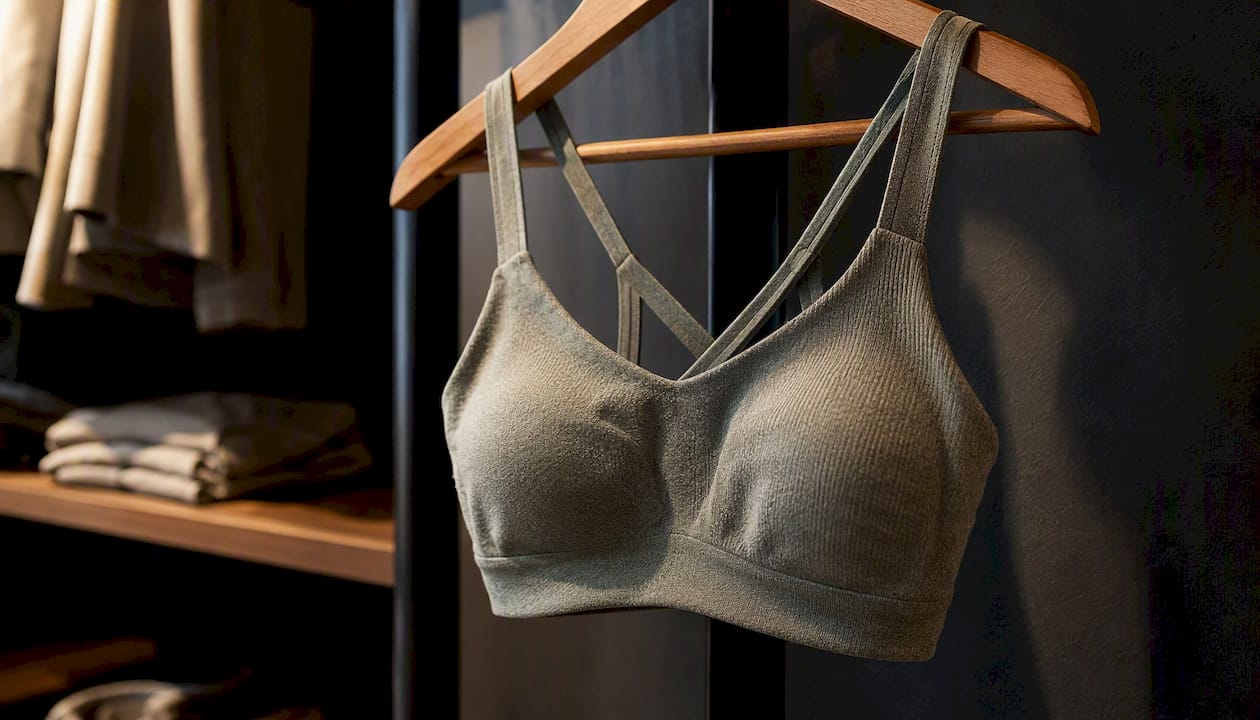
For A–C cups, a well-fitted bralette can serve as a primary everyday bra for desk work, errands, and low-activity days. For D+ cups, bralettes work best as a layering piece or a weekend option, paired with a structured bra on high-activity days.
Practical styling tips:
- Layer a lace bralette under a sheer blouse or open-button shirt for intentional visible styling.
- Wear under a blazer or structured jacket where the bralette peeks out at the neckline.
- Pair with high-waisted bottoms so the bralette functions as a crop top in casual settings.
- For backless tops, choose a bralette with a low-back strap or a crossback design.
Who should avoid bralettes as primary support: Anyone with DD+ cups who needs underwire support for long days, anyone doing high-impact activity, and anyone whose back or shoulder comfort depends on structured support.
Room24’s bralette collection is built around sustainable materials and statement cuts, including the Bella Bralette, which combines a sculpting fit with eco-conscious fabric. The brand’s approach to bralettes sits at the intersection of fashion-forward design and responsible production, which makes it a practical reference point for readers who want a bralette that works as a visible wardrobe piece rather than just an undergarment.
Sizing note: Bralettes typically run in S/M/L rather than band-and-cup sizing. If you’re between sizes, size down for more support. If you’re wearing a bralette primarily as a fashion layer, sizing up gives a more relaxed, intentional look.
The case for a small, intentional bra rotation
A small, intentional rotation of three to five bras outperforms any single “all-purpose” bra, every time. The Good Housekeeping textile lab found the highest satisfaction when bras are matched to specific life chapters — work, exercise, postpartum, post-mastectomy — rather than stretched across every situation.
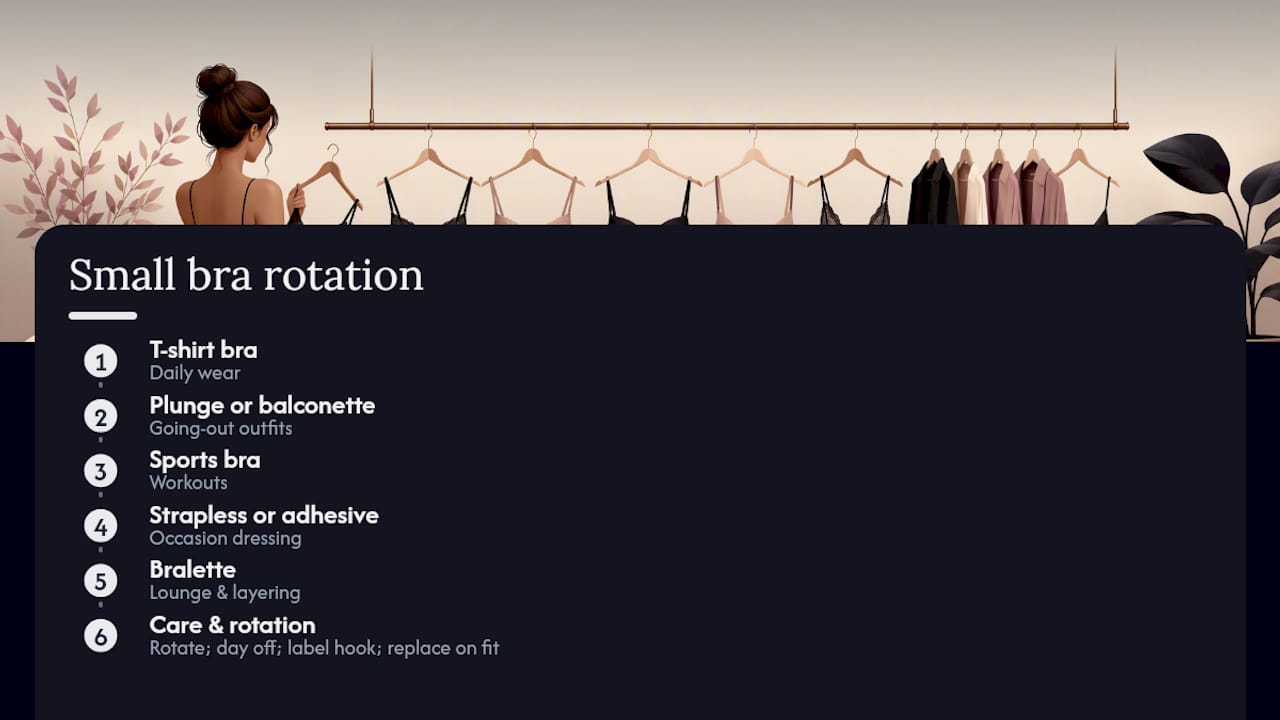
The practical version of this: own a T-shirt bra for daily wear, a plunge or balconette for going-out outfits, a sports bra for workouts, and a strapless or adhesive for occasion dressing. That’s four bras covering the majority of what most wardrobes actually need. A bralette rounds out the set for lounge and layering.
Rotate them. Give each bra at least a day off between wears so the elastic recovers. Store them properly (cups nested, not folded). And replace on fit, not on appearance — a bra that looks fine but rides up is already failing you.
Pro Tip: Label the hook row you started on when a bra is new. When you find yourself consistently on the tightest hook, the band has stretched and it’s time to replace, not adjust.
Room24’s bralette collection: sustainable style that works
If the bralette section of this guide resonated with you, Room24 is worth a look before you buy. The brand’s bralettes are designed with signature cut-outs and sculpting fits, made from sustainable materials, and styled to be seen rather than hidden. That’s a meaningful difference from the average basic bralette.
The Bella Bralette is a strong starting point: a fashion-forward design that works as a visible layer under blazers, sheer tops, or on its own. Room24’s full women’s fashion range at Room24 includes sizing guidance and material details on each product page, so you can confirm fit and fabric before ordering. Check the bralette collection for current styles, and use the product pages to match the cut to your wardrobe.
Sources
- 10 Best Bras of 2026, Tested by 1,000+ Women and Textiles Experts
- The Best Bras of 2026, Tested by Oprah Daily Editors
- Bra Types Explained: Complete Visual Guide to Every Style (2026) | BraFinder
- Best Bra Style Guide: Every Type Explained by a Fit Specialist 2026


