


The fastest way to get that charity shop style look is to buy one statement piece with real vintage character, then build a neutral modern frame around it, matching proportions and tones the way Good Housekeeping’s guide on mixing old and new and Martha Stewart’s advice on blending eras both recommend. Room24 makes this easy because its structured dresses, bodysuits, and blazers are cut with the weight and construction that thrifted pieces have and fast fashion usually doesn’t.
Here’s the method broken down:
- Pick one vintage-inspired focal piece: a structured blazer, a boxy jacket, or a statement midi skirt.
- Ground it with a neutral modern base, two or three pieces max, in muted tones.
- Match proportions and tone: if the focal piece is oversized, keep everything else fitted, and vice versa.
- Finish with one or two accessories that reference an era, a brass buckle, tortoiseshell buttons, or a structured leather bag.
If you’re shopping online and want a shortcut, start with a Room24 dress, bodysuit, or blazer as your frame piece. They’re built with the fabric weight and sculpting fit that make secondhand finds look expensive, without the hunting.
Key Takeaways
The charity shop style look comes down to one rule: pick a single vintage-inspired focal piece, then build a disciplined, neutral, proportion-matched frame around it.
| Point | Details |
|---|---|
| One focal piece only | Choose a single vintage-inspired item per outfit; let everything else recede. |
| Match proportions, not eras | Pair oversized pieces with fitted ones, and keep colors to a three-tone maximum. |
| Fabric and construction signal age | Prioritize wool, linen, silk, and leather with visible weight and stitching. |
| Small alterations go a long way | Hemming, button swaps, and tapering make new pieces read as period-correct. |
| Care preserves the look | Cold wash delicate fibers, repair early, and rotate pieces to extend their life. |
| Shop the recipe, not the trend | Room24’s dresses, bodysuits, and cover-ups work as ready-made focal or frame pieces for these formulas. |
Try one recipe this week: pick a focal piece from Room24’s dress collection, build the neutral frame around it, and see how the proportion rule changes the whole outfit.
Table of Contents
- What Are the Core Rules Behind Charity Shop Fashion Tips?
- What Outfit Formulas Recreate a Thrifted Look?
- What Should You Look For When Shopping Online?
- How Do You Tailor a New Piece to Look Vintage?
- Which Accessories Make the Look Convincing?
- How Do You Care for Pieces to Keep the Vintage Look?
- Why Mixing Eras Matters More Than Perfect Matching
- Where to Start Shopping the Look
- Sources
What Are the Core Rules Behind Charity Shop Fashion Tips?
The whole look rests on restraint, not chaos. Thrift shop fashion advice from actual stylists comes down to picking one piece with personality and refusing to let anything else compete with it.
Start with one vintage-inspired item per outfit, a blazer, a skirt, or a statement top, and treat everything else as a frame. Stylists consistently recommend beginning with one piece you genuinely love and layering modern elements as a calm backdrop, because two competing statement pieces cancel each other out instead of reinforcing the look.
Proportion matters more than era. Pair an oversized vintage-style blazer with fitted modern trousers, or a fitted vintage top with a wide-leg pant. Mismatched proportions, oversized on oversized, are what push an outfit from “vintage-inspired” into “costume.” Color discipline matters just as much: stick to a three-color maximum, one neutral base plus a single accent, so pieces from different eras and price points read as one considered outfit rather than a pile of unrelated finds.
Construction cues tell the eye something is quality even before texture does. Look for visible topstitching, natural fibers with weight, and buttons or hardware that feel substantial rather than hollow. Designers also advise limiting competing styles and using a neutral backdrop so a single standout piece can actually stand out.
Pro Tip: Pick one shared detail, hem length, collar shape, or hardware finish, and repeat it across two or three pieces in the outfit. That single echo is what makes an outfit feel curated instead of accidental.
What Outfit Formulas Recreate a Thrifted Look?
Outfit recipes work because they force the same discipline every time: one focal piece, a neutral frame, and finishes that share a tone. Here are five you can shop and wear this week.
- Smart-casual work. Anchor the look with a structured blazer with covered buttons. Pair it with a slim midi skirt and a simple top underneath. Finish with low block heels and a structured bag. The blazer does the talking; everything else recedes.
- Elevated evening. Choose a corset-style top or bodysuit with sculpting detail as your anchor, then pair it with a straight-cut skirt in a matching tone. Add a hammered metal cuff and pointed heels. Keep the palette to two colors so the sculpting silhouette reads as intentional, not busy.
- Resort or terrace. A Room24 cover-up with a retro print becomes the focal piece over a simple swim set. Add woven sandals and tortoiseshell sunglasses. Swap the cover-up for a lightweight cardigan in cooler months and the same formula holds.
Each recipe substitutes easily: swap the skirt length for the season, or trade heels for boots when temperatures drop. The logic stays fixed even as the pieces change.
What Should You Look For When Shopping Online?
Fabric is the detail most shoppers get wrong. A garment can have the right cut and still look cheap if the fabric doesn’t hold its shape the way a decades-old wool coat or vegetable-tanned leather bag does.
Favor brushed wool, raw silk, heavyweight linen, and vegetable-tanned leather when you can find them; they photograph with the kind of texture that reads as lived-in rather than new. On cut, look for high waists, structured blazer shoulders, boxy jackets, midi skirts with real drape weight, statement collars, and covered buttons, all details that signal an era rather than a trend cycle. On sustainability, check product pages for organic or renewable fibers, low-impact dyes, and any transparent supply chain notes; these cues tend to correlate with the same durable construction that makes a piece look intentional years from now.
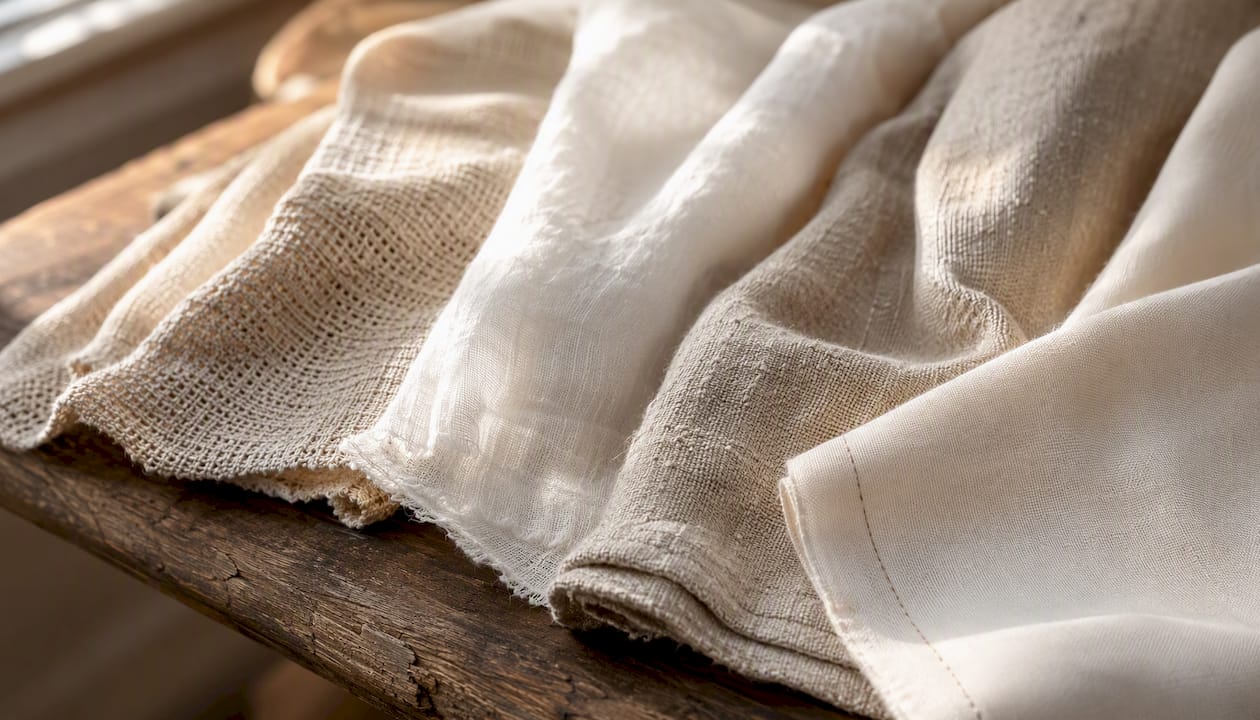
| Fabric type | Why it reads vintage | Sustainability consideration | Easy modern substitute |
|---|---|---|---|
| Brushed wool | Matte finish and structure mimic older tailoring | Often biodegradable, check for responsibly sourced wool | Wool-blend blazer with structured shoulders |
| Raw silk | Slight texture and irregular sheen avoid a “new” gloss | Look for peace silk or low-impact dye processes | Textured silk-blend blouse |
| Heavyweight linen | Weight and creasing pattern age naturally and gracefully | Linen is a low-water crop; check for organic certification | Structured linen-blend skirt or dress |
| Vegetable-tanned leather | Develops patina instead of staying flat and shiny | Avoids heavy-metal tanning chemicals | Vegetable-tanned leather belt or bag |
Pro Tip: You can’t touch the fabric online, so read the drape in the product photo instead. If the model shot shows the garment skimming the body with visible fold lines rather than clinging flat, the fabric likely has real weight, closer to what you’d find on a well-made vintage piece.
How Do You Tailor a New Piece to Look Vintage?
Small alterations do more for authenticity than any single purchase decision. A handful of changes reliably shift a new garment toward a period-correct silhouette: shortening or lengthening a hem, adding subtle shoulder structure, swapping plastic buttons for brass or tortoiseshell, and tapering trouser legs.
Some of these are safe to do yourself. Sewing on new trim, hand-stitching a button swap, or rolling and pressing a cuff all take under an hour and no special equipment. Structural work, shoulder reshaping, lining changes, or anything that touches the garment’s internal seams, is worth handing to a tailor. Bring a reference photo when you go. Naming the era or silhouette you’re after (“1970s wide lapel” or “1990s boxy shoulder”) gives a tailor something concrete to work from, and asking for reversible alterations keeps your options open if you change your mind later.
Here’s a quick walk-through for modernizing an oversized blazer into a vintage-inspired jacket:
- Try the blazer on and mark where you want the hem to fall, typically at or just below the hip for a period-correct length.
- Ask your tailor to taper the sleeves slightly while keeping the shoulder structure intact.
- Swap the existing buttons for brass or tortoiseshell replacements.
- Have the tailor nip in the waist seam by half an inch on each side if the silhouette needs more shape.
- Press and steam the finished jacket to set the new lines.
Pro Tip: Ask your tailor to save the original buttons in a small bag. If you ever resell or repurpose the jacket, having the originals on hand keeps its resale value intact.
Which Accessories Make the Look Convincing?
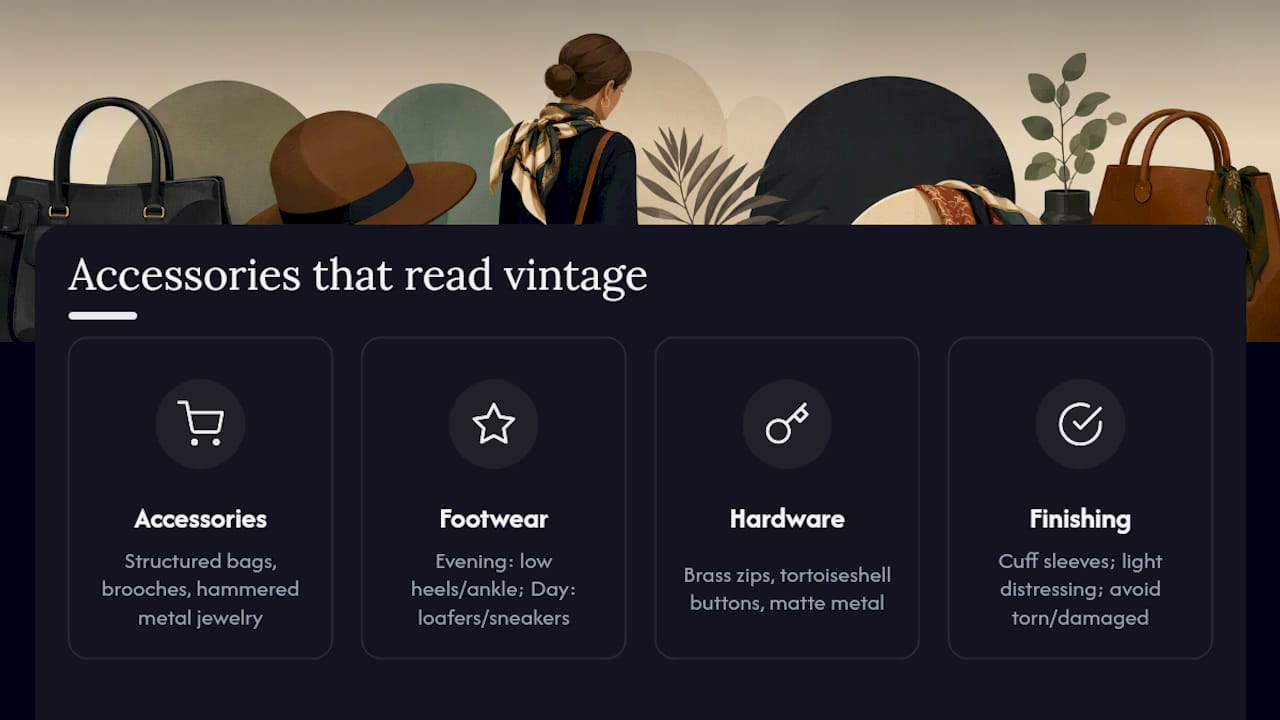
Accessories close the gap between “nice new outfit” and “found this incredible piece.” Structured leather bags, brooches, hammered metal jewelry, worn-in leather belts, and retro sunglasses all carry visual shorthand for age that a plain modern accessory doesn’t.
Footwear should match the outfit recipe, not just the season. Low-heel court shoes or ankle boots suit evening looks; loafers or retro-style sneakers work for daytime; save minimalist modern heels for outfits that already lean heavily vintage, where you want one clean, contemporary counterpoint. Hardware finish matters more than most people think: brass zips, tortoiseshell buttons, and matte (not shiny) metal all anchor an outfit visually the same way a shared color does.
Interest in preloved and vintage-style dressing isn’t a niche habit anymore. A regional stylist’s guide on preloved fashion notes that in Australia’s market, roughly 86% of shoppers surveyed said they buy secondhand, a sign of how mainstream this aesthetic has become even among shoppers who ultimately choose new pieces for fit or quality reasons.
Two finishing moves do a lot of work for very little effort. Cuff or roll a sleeve and press it so the fold sits deliberately, not accidentally. And where a piece allows it, light distressing (a gentle rub on a leather edge, a slightly softened metal finish) reads as worn-in, while anything that looks torn or damaged breaks the illusion entirely.
Pro Tip: Buy secondhand costume jewelry for the accessories layer even if your clothing is new. Jewelry ages visibly in a way that’s hard to fake, and it’s usually the cheapest way to add a genuine period detail.
How Do You Care for Pieces to Keep the Vintage Look?
The look only holds up if the garment does. Fiber-specific laundering matters here more than usual, since the fabrics that read as vintage (wool, linen, silk, leather) are also the ones that degrade fastest with careless washing.
- Hand wash or use a cold, gentle cycle for wool and silk; both lose shape and sheen with hot water and aggressive agitation.
- Reserve dry cleaning for structured pieces with linings or tailoring, where home washing risks warping the shape.
- Wipe leather hardware and belts with a damp cloth and condition occasionally rather than letting them dry out and crack.
- Re-stitch loosening hems and replace missing buttons as soon as you notice them; small repairs done early prevent bigger ones later.
- Rotate pieces in your wardrobe rather than wearing the same two or three items constantly, and store structured jackets on shaped hangers to preserve their line.
Pro Tip: Some fading is part of the look. A slightly softened color on a well-loved denim jacket reads as patina; uneven blotching or stiff, cracked fabric reads as damage. Learn to tell the two apart before you decide a piece needs replacing.
For seasonal adaptation, add a thin slip layer under a summer dress in cooler months, or line a jacket with a removable liner rather than buying a second, season-specific version of the same silhouette. One well-made piece that adapts across seasons is more sustainable, and more in line with a vintage wardrobe’s original logic, than a closet full of single-season purchases.
Why Mixing Eras Matters More Than Perfect Matching
I think the biggest myth in vintage-inspired dressing is that it’s about finding pieces that “match” an era. It isn’t. The outfits that actually work are the ones where nothing matches perfectly and everything still feels connected, through proportion, through one repeated detail, through restraint. That’s harder to fake than people expect, and it’s why so many attempts at this look end up costume-y instead of considered.
Buying new instead of secondhand doesn’t undercut that. What matters is whether the piece has real construction behind it, weight, natural fiber, thoughtful cut, the same qualities that make an actual vintage find worth keeping. That’s the philosophy behind Room24’s approach to sustainable, structured pieces: buy fewer things, buy them with intention, and let them earn their place in rotation for years instead of one season.
Where to Start Shopping the Look
Room24’s dress collection is the fastest place to find a ready-made focal piece: structured silhouettes, textured fabrics, and sculpting fits that do the same job a great thrifted find would, without the search. If you’re building the smart-casual work recipe or the elevated evening look from earlier, start there.
For the casual and brunch formulas, Room24 bodysuits work as the fitted modern frame under a boxy jacket or cardigan, and the loungewear collection doubles as relaxed separates for at-home or low-key weekend looks that still follow the same proportion rules. Every piece is made with the sustainable materials and visible construction quality that make new clothing read as considered rather than disposable, which is the entire point of this styling approach in the first place.
If you want to try the method today, pick one Room24 piece that matches the outfit recipe closest to your week ahead, browse the dress collection or bodysuits, and build the rest of the outfit around it using the neutral-frame rule above.


