


TL;DR:
- Circular design emphasizes creating garments with longevity, repairability, and recyclability at the core of production. Both brands and shoppers benefit from durable, versatile clothing that reduces environmental impact and retains value over time. Regulatory and market pressures are accelerating the shift toward eco-conscious, design-first fashion practices.
Circular design is a design-first approach that eliminates waste by keeping materials and garments in use longer. For luxury apparel and swimwear shoppers, that distinction matters more than most brands let on. The Ellen MacArthur Foundation frames design as the root cause of waste and the primary solution. Regulatory bodies like the EU’s ESPR are now codifying that logic into law. And brands like Room24 are already building it into their swimwear.
TL;DR for shoppers:
- Circular design shows up in high-end pieces as durability, repairability, and take-back programs, not just recycled fabric labels.
- The value proposition is real: garments designed for longevity hold their fit, their style, and their resale value longer.
- When you shop, check for fiber composition by weight, a repair or return policy, and visible construction details like reinforced seams or reversible builds.
Table of Contents
- Why circular design is the foundation of sustainable fashion
- What brands and shoppers both gain from circular principles
- Concrete strategies designers use to build circularity in
- How to evaluate circular claims when you shop
- The regulatory and market forces pushing circularity forward
- Room24 in practice: reversible swimwear as circular design
- A starter checklist for brands beginning the circular shift
- Key Takeaways
- The case for designing with intention
- Room24’s sustainable collections are worth a closer look
- Useful sources
Why circular design is the foundation of sustainable fashion
The three core principles of circular design are eliminate waste and pollution, circulate products and materials at their highest value, and regenerate nature. Every one of them is driven by design decisions made before a single stitch is sewn.
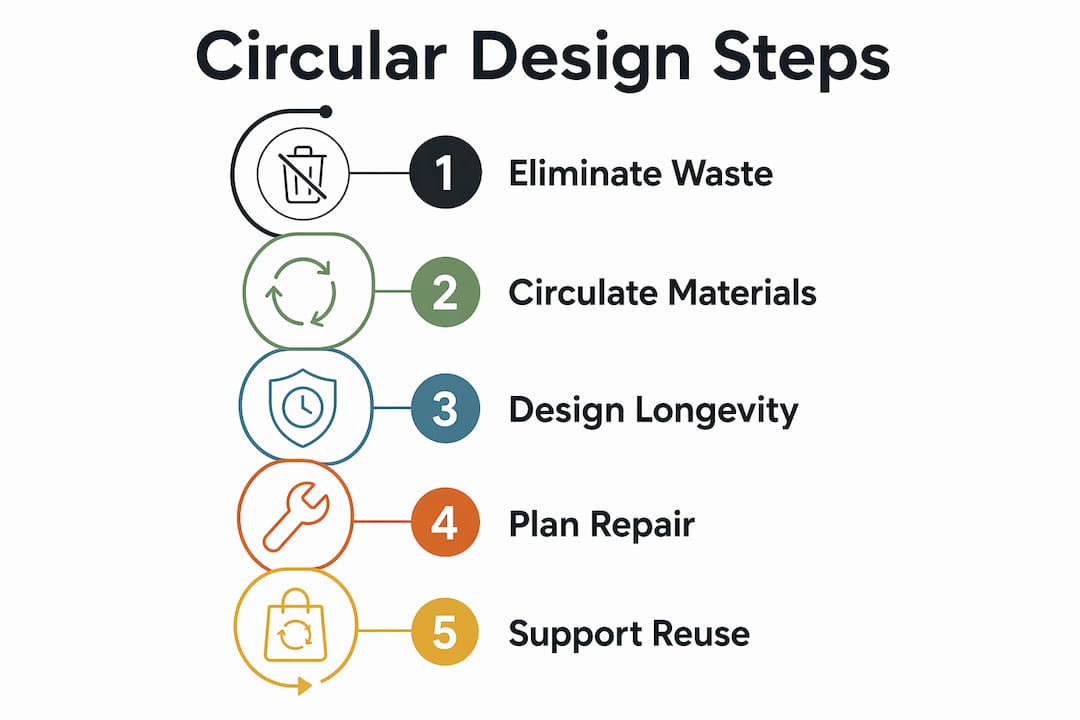
Here is what each principle looks like in a swimwear or apparel context:
| Principle | Apparel action | Shopper signal |
|---|---|---|
| Eliminate waste and pollution | Use mono-fiber fabrics; avoid mixed-material composites | Single fiber listed on label (e.g., 100% nylon) |
| Circulate products at highest value | Design for disassembly; reinforced seams; modular hardware | Repair kit included; spare parts available |
| Regenerate nature | Choose biodegradable trims; use certified recycled inputs | Certifications listed on product page |
The critical distinction: circular design is upstream work. It is not end-of-life recycling. Planning for repair, reuse, and end-of-life recovery happens at the concept stage, before a pattern is cut. Recycling a garment after it falls apart is the last resort, not the strategy.
What brands and shoppers both gain from circular principles
For premium brands, the business case is straightforward. Designing for durability and repairability reduces long-term resource costs while protecting margins against raw-material volatility. A garment built to last significantly longer reduces the need for replacement, leading to fewer returns, fewer complaints, and a stronger brand reputation.
For shoppers, the gains are just as concrete:
- Fit that holds: Reinforced seams and quality-first construction mean a piece keeps its shape through repeated wear and washing.
- Resale value: Timeless aesthetics paired with durability make sustainable garments desirable longer, which translates directly to stronger resale prices.
- Lower lifecycle cost: A higher-priced swimsuit that endures multiple seasons tends to cost less per wear than a lower-priced one that degrades quickly.
- Reduced environmental footprint: Fewer garments purchased means fewer resources extracted.
Circular design must be paired with timeless aesthetics and fit. Sustainability that compromises style will not hold premium value or resale desirability.
Concrete strategies designers use to build circularity in
The Circular Design Guide positions circular design as a mindset that scales from individual products to entire business systems. In practice, that means specific construction and business-model choices.
Design strategies:
- Mono-material construction (single fiber type throughout the garment)
- Design for disassembly: modular hardware, breakaway-stitched labels, separable trims
- Reversible builds that double wearability per garment
- Reinforced stress points and flat-locked seams for longevity
- Repair-forward construction with accessible seam allowances
Business model strategies:
- Take-back programs for worn or damaged pieces
- Repair services or repair kits shipped with the garment
- Limited-run classics designed to stay relevant across seasons
- Resale partnerships or brand-run resale platforms
| Strategy | Brand impact | Shopper signal | Complexity |
|---|---|---|---|
| Mono-material fabric | Easier end-of-life recycling | Single fiber on label | Low |
| Reversible design | Doubles use per SKU | Two-in-one product page | Medium |
| Modular hardware | Replaceable components | Spare parts listed | Medium |
| Take-back program | Closed material loop | Return policy on site | High |
| Repair service | Extended product life | Repair policy page | High |
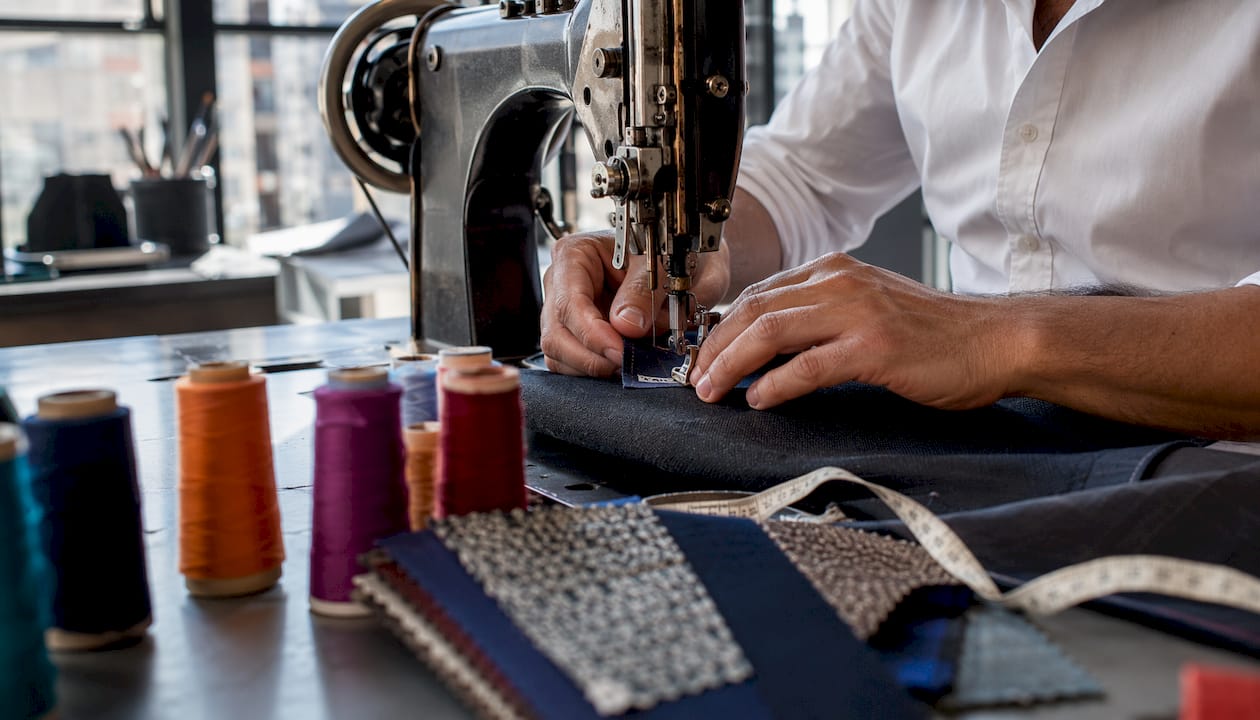
Pro Tip: Attach labels with breakaway stitching instead of permanent sewing. It takes seconds at the design stage and makes the garment far easier to recycle at end of life, since labels are often a different fiber than the body fabric.
How to evaluate circular claims when you shop
Greenwashing is real. Material choice alone is not enough; brands that tout a single “sustainable” fiber while ignoring garment longevity or repairability are not practicing circular design. Here is a checklist to use on any product page.
Shopping checklist:
- Fiber composition by weight: Is the full breakdown listed? A single “recycled nylon” claim with no percentages is a flag.
- Repair policy: Does the brand offer repairs, a repair kit, or spare hardware?
- Take-back or return program: Can you return the garment at end of life?
- Construction details: Look for reinforced seams, modular trims, or reversible builds mentioned in the product description.
- End-of-life instructions: Does the product page tell you how to recycle or return the piece?
- Certifications: OEKO-TEX, bluesign, or Global Recycled Standard add third-party verification.
Questions worth asking customer service:
- Is this piece designed for disassembly?
- Are spare parts or replacement hardware available?
- What is your repair policy if a seam fails?
- Do you accept returns for resale or recycling?
The regulatory and market forces pushing circularity forward
The EU’s Ecodesign for Sustainable Products Regulation positions product design as the primary factor for regulatory compliance, covering recyclability, hazardous substance content, and climate impact. ESPR is an EU framework, but its reach extends to any brand selling into European markets, which includes many US-based and US-targeting labels.
In the US, federal circular economy policy is less prescriptive than ESPR, but market forces are moving in the same direction. Resource scarcity and raw-material price volatility are pushing brands toward longer product lifetimes regardless of regulation. Premium consumers are increasingly asking for durability data, not just sustainability marketing.
The practical timeline for brands looks like this: regulatory pressure (EU ESPR now, US policy developing) leads to material transparency requirements, which raises buyer expectations, which makes circular design a competitive necessity rather than a brand story.
Room24 in practice: reversible swimwear as circular design
Room24’s approach to swimwear illustrates several circular principles at once. The Reversible Rita Bottom Ocean is a direct product-level example: one garment, two wearable sides, which doubles its usable life without doubling material use. That is multifunctional design in practice, not in a mission statement.
The brand story reflects a commitment to thoughtful construction and versatility, with pieces designed to be worn in multiple ways and across multiple occasions. Room24’s editorial content on fit and sculpting demonstrates that the design intent goes beyond aesthetics to how a garment performs over time.
Circular signals to look for on Room24 product pages:
- Reversible construction listed in product description
- Material composition details
- Design features that support longevity (sculpting fits, reinforced construction)
- Versatility cues: pieces styled multiple ways
Room24’s reversible swimwear demonstrates that circular design and high-end style are not a trade-off. A piece designed to be worn two ways, built to last, is the clearest expression of what circular design means for a shopper.
A starter checklist for brands beginning the circular shift
Implementing circular criteria at the concept stage is significantly more effective than retrofitting circularity after a design is finalized. Here is where to start.
- Embed circular criteria in the design brief before sketching begins. Define longevity targets, material constraints, and disassembly requirements upfront.
- Choose mono-materials where possible. Single-fiber garments are dramatically easier to recycle at end of life.
- Design for disassembly. Use modular fastenings, breakaway label stitching, and separable trims.
- Pilot take-back for one style. Start with your highest-volume piece and build the return logistics before scaling.
- Document repair workflows. Customer service needs a clear process for handling repair requests before you publish a repair policy.
Early metrics to track:
- Product lifetime target (seasons of intended use)
- Repair request rate per 100 units sold
- Take-back return rate
- Percentage of mono-material components in the collection
Stakeholder note: design and sourcing teams own steps 1–3; customer service owns step 5. Pilot scope should be one style, one season, before any brand-wide commitment.
Key Takeaways
Circular design prevents waste by making longevity, repairability, and material recovery part of the design brief, not an afterthought added at end of life.
| Point | Details |
|---|---|
| Design is upstream | Circular outcomes are determined before manufacturing, not after a garment is discarded. |
| Three core principles | Eliminate waste, circulate materials at highest value, and regenerate nature, all driven by design choices. |
| Shopper checklist | Check fiber composition, repair policy, take-back program, and construction details on every product page. |
| Regulatory pressure is real | EU ESPR mandates design-first compliance; US market forces are moving in the same direction. |
| Room24 example | The Reversible Rita Bottom Ocean doubles wearability per garment, a direct application of multifunctional circular design. |
The case for designing with intention
Circular design gets framed as an environmental story, and it is. But for anyone who buys high-end fashion, it is also a quality story. A garment built to last, to be repaired, and to hold its value is simply a better garment. The brands that understand this are not making a sacrifice for sustainability. They are raising their standard.
What gets missed in most conversations about circular fashion is that the design decisions are invisible to the shopper until something goes wrong. A seam that fails after three wears, a trim that cannot be replaced, a fabric blend that cannot be recycled: these are design failures, not wear-and-tear. Circular design makes them less likely by treating longevity as a specification, not a hope.
Room24’s sustainable collections are worth a closer look
Room24 builds pieces that earn their place in a wardrobe for more than one season. The swimwear collection includes reversible styles that give you two looks from one garment, which is circular design made wearable. The bodysuits and cover-ups are constructed with the same attention to fit and longevity.
Check product pages for material composition, reversible construction notes, and design details that signal a longer-wear intent. If you have questions about a specific piece, repair options, or how a garment is constructed, Room24’s customer service team can walk you through it. Browse the full collection and look for the signals that matter.
Useful sources
- Ellen MacArthur Foundation: Circular Economy Principles — The foundational framework for the three core circular principles; the primary reference for definitions used throughout this article.
- Ellen MacArthur Foundation: Circular Design Guide — Practical tools and systems-thinking frameworks for designers and brands.
- European Environment Agency: Circular Design and Sustainable Production — ESPR context and Europe’s progress on circular production; relevant for understanding regulatory direction.
- Circular Economy Institute: What Is Circular Design? — Clear explainer on the difference between circular design and end-of-life recycling.
- MDPI Sustainability: Fostering Circular Life Cycle Strategies — Academic framework linking design-for-sustainability approaches to circular business models.
- Room24 Brand Story — Brand context and design philosophy behind Room24’s approach to versatile, long-lasting apparel.
- Room24 Reversible Rita Bottom Ocean — Product-level example of multifunctional circular design in swimwear.


