

TL;DR:
- Choosing bamboo lyocell with verified closed-loop processing offers superior moisture management, softness, and durability. Be cautious of labels claiming “bamboo” without specifying fiber type or eco-certifications, as most conventional options are chemically processed viscose. Authentic sustainable bamboo fabric relies on transparent sourcing, third-party verification, and eco-friendly manufacturing practices.
Yes, choose bamboo fabric when you want silk-like softness, superior moisture management, and a cooler feel against your skin. The catch is real: most “bamboo fabric” sold in the U.S. is actually bamboo viscose (rayon), produced with chemical-intensive processes that undercut the eco-story. The version worth seeking out is bamboo lyocell, which uses a closed-loop solvent recovery process that recaptures 98–99% of its non-toxic solvent. For a quick filter: check the fiber type (lyocell beats viscose; mechanical bamboo is rare but clean), look for closed-loop manufacturing, and verify third-party certification such as OEKO-TEX Standard 100.
The FTC requires that chemically processed bamboo be labeled “rayon made from bamboo” or “viscose made from bamboo,” not simply “bamboo.” If a label skips that detail, that alone is a red flag worth taking seriously.
Table of Contents
- Why bamboo fabric outperforms cotton on comfort
- How bamboo becomes fabric: three very different routes
- Sustainability: where bamboo shines and where it falls short
- How bamboo fabric performs in real life and how long it lasts
- How to pick genuinely sustainable, high-performing bamboo clothing
- Myths and overstated claims to watch for
- Room24’s approach to bamboo-based fibers and sustainable sourcing
- Key Takeaways
- The case for being specific about “sustainable bamboo”
- Room24’s sustainably sourced collections
- Recommended reading and authoritative sources
Why bamboo fabric outperforms cotton on comfort
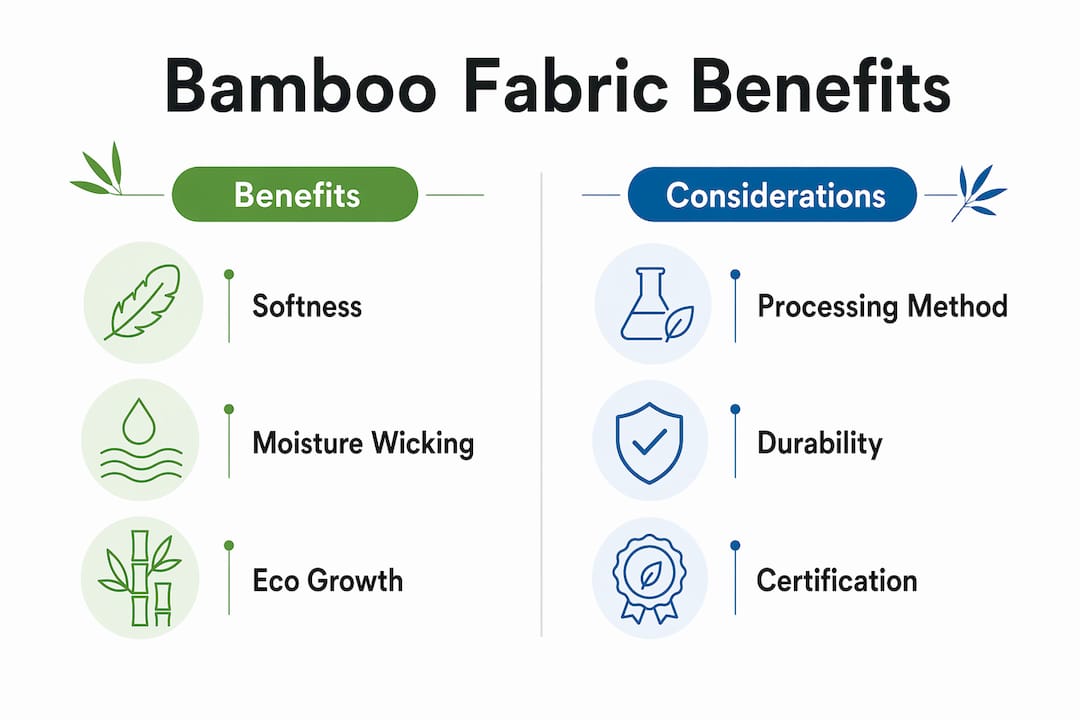
Bamboo fabric’s performance edge comes from its fiber geometry, not marketing copy. Regenerated bamboo fibers have a smooth, round cross-section with micro-gaps along their length. Those micro-gaps in bamboo fiber move moisture away from skin faster than cotton can, which translates to a noticeably drier feel during warm weather or exercise.
Key performance benefits:
- Softness: The round fiber cross-section produces a low-friction surface that feels close to silk. Sensitive skin tolerates it well.
- Moisture-wicking: Micro-channels in the fiber structure pull sweat away from skin faster than cotton, keeping you drier.
- Breathability and cooling: Bamboo fabrics run 2–3 °C cooler than surrounding temperature in controlled testing, and offer higher water vapor permeability than comparable cotton constructions.
- Drape: Regenerated bamboo fibers hang beautifully, which is why they show up in dresses, bodysuits, and cover-ups where fluid movement matters.
- Thermal regulation: The same breathability that cools you in summer provides mild insulation in cooler temperatures.
One claim that gets overstated is the antibacterial property. Raw bamboo contains lignin-based compounds with genuine antimicrobial activity, but chemical regeneration into viscose strips most of those compounds out. Finished viscose typically lacks inherent antimicrobial activity unless a treatment or finish has been applied. Lyocell retains more of the fiber’s original character, but even then, any antibacterial claim on a finished garment should be backed by third-party test data, not just the plant’s reputation.
How bamboo becomes fabric: three very different routes
The manufacturing method determines almost everything about a bamboo garment’s sustainability, safety, and feel. There are three routes, and they are not interchangeable.
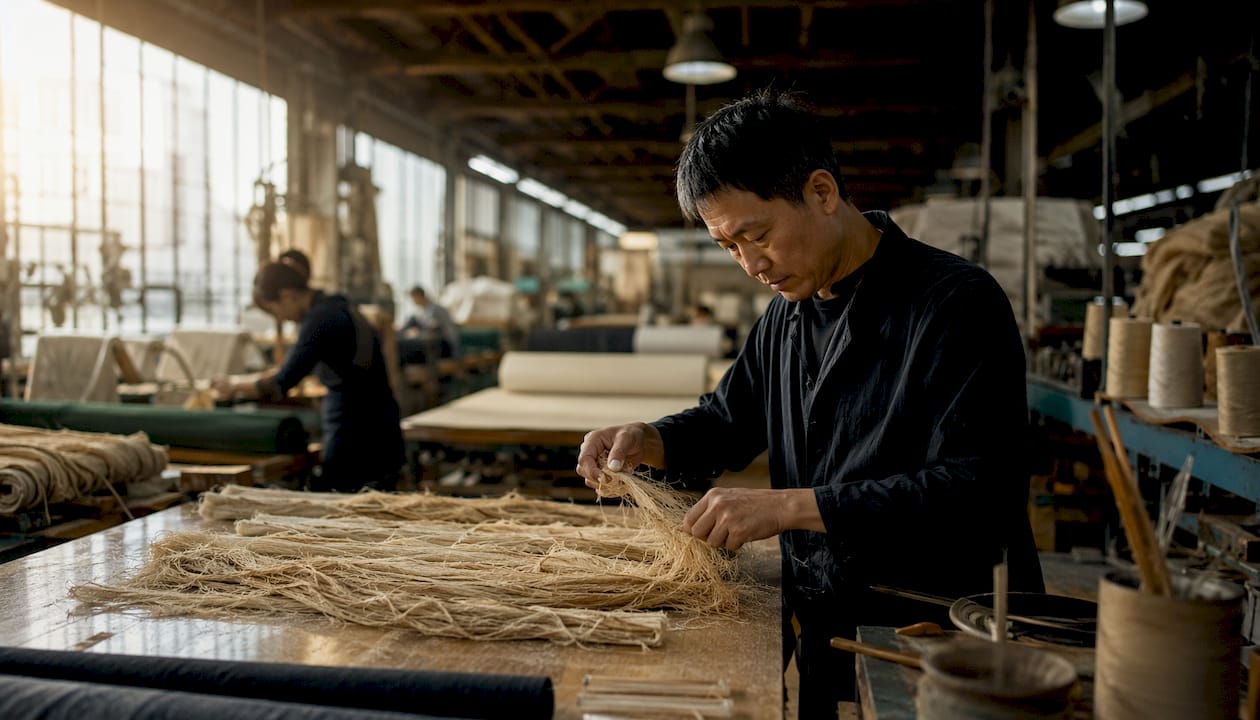
Mechanical processing (bamboo linen): The bamboo stalk is crushed and natural enzymes break down the fibers, which are then combed into yarn. No harsh solvents. The result is coarse, linen-like, and genuinely natural. It is also rare and expensive because the process is labor-intensive and yields a rougher hand.
Viscose/rayon from bamboo: The dominant commercial route. Bamboo pulp is dissolved in carbon disulfide, a toxic solvent, then extruded through spinnerets into fiber. The process is open-loop in most conventional factories, meaning solvents and wastewater enter the environment. The resulting fabric is soft and affordable, but the production footprint is significant.
Bamboo lyocell: Bamboo pulp dissolves in N-methylmorpholine N-oxide (NMMO), a non-toxic solvent, in a closed-loop system that recovers 98–99% of the solvent for reuse. The fiber achieves comparable softness and thermoregulation to viscose with far lower chemical risk. Lenzing’s TENCEL lyocell is the best-known example of this approach.
| Process | Solvent used | Closed-loop recovery | Typical hand feel | Environmental risk |
|---|---|---|---|---|
| Mechanical (bamboo linen) | None | N/A | Coarse, linen-like | Very low |
| Viscose/rayon from bamboo | Carbon disulfide | No (open-loop) | Soft, drapey | High |
| Bamboo lyocell (e.g., TENCEL) | NMMO (non-toxic) | 98–99% | Soft, drapey | Low |
Pro Tip: When shopping online, search the product description for the words “lyocell” or “TENCEL.” If the listing says only “bamboo” or “bamboo rayon,” ask the brand directly whether their supplier uses closed-loop solvent recovery. Transparency on that question tells you a lot.
Sustainability: where bamboo shines and where it falls short
At the crop level, bamboo has a genuinely strong story. It is one of the fastest-growing plants on earth, requires minimal irrigation, and grows without pesticides or synthetic fertilizers in most commercial cultivation. It sequesters carbon, and its root system helps prevent soil erosion. Those are real advantages.
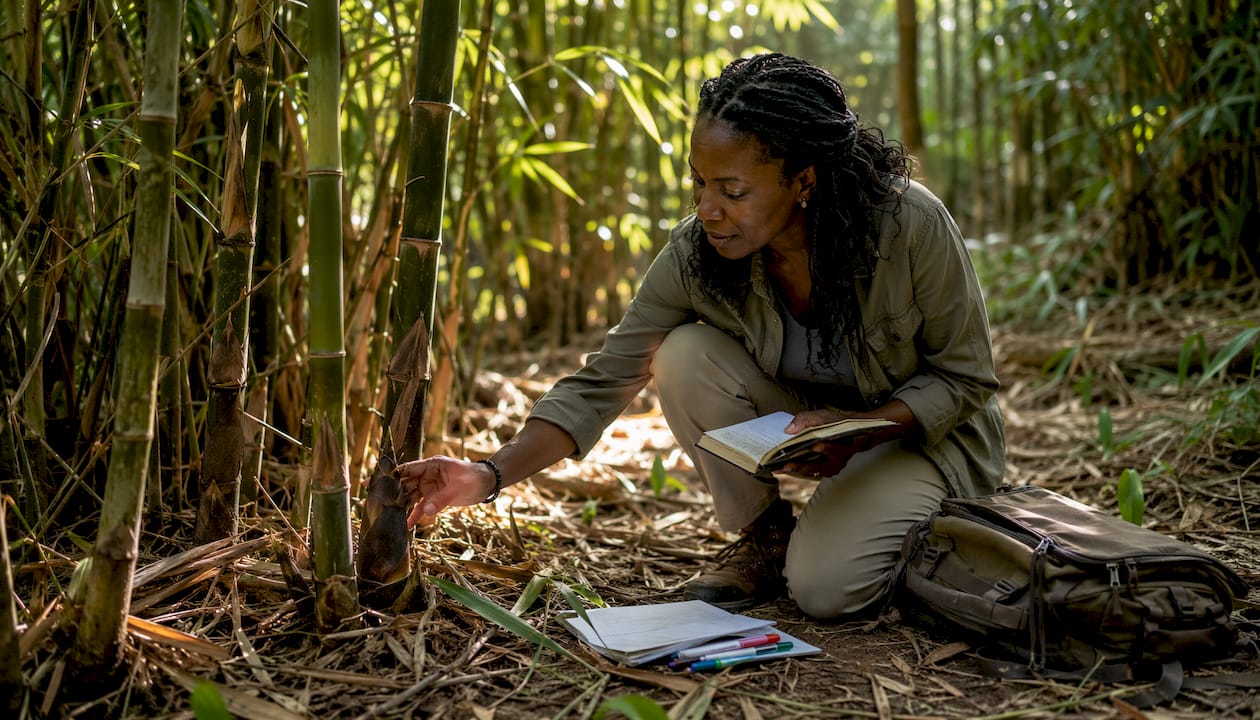
Processing is where the picture gets complicated. Conventional viscose production uses carbon disulfide, a solvent the CDC classifies as hazardous to the nervous system, and sulfuric acid in the spinning bath. Open-loop factories discharge these into waterways. Supply chains are often opaque enough that buyers cannot verify where or how the fiber was processed.
Sustainability signals worth trusting:
- OEKO-TEX Standard 100 certification on the finished garment (verifies low residual chemicals)
- Lyocell production with documented closed-loop solvent recovery
- FSC certification on the bamboo source (verifies responsible forestry)
- Supplier transparency statements that name the fiber producer
Independent sustainability scoring reflects this split. Tap.eco rates bamboo fabric at 58/100, a middling score that captures exactly this tension: strong raw-material credentials, weaker processing profile.
On greenwashing: The FTC has taken enforcement action against brands that market viscose products as simply “bamboo” or imply inherent eco-credentials without disclosing the chemical process. Under FTC guidance, a brand claiming environmental benefits for a viscose product must be able to substantiate those claims. “Made from bamboo plants” without disclosing the viscose process is the kind of framing the FTC flags as potentially misleading.
How bamboo fabric performs in real life and how long it lasts
Bamboo lyocell and viscose both feel wonderful on day one. The durability story is more nuanced. Viscose is inherently weaker when wet, which means aggressive washing shortens its life noticeably. Lyocell holds up better under repeated laundering, though it still trails cotton and modal for raw tensile strength. Pilling is a common complaint with lower-GSM bamboo viscose, particularly at friction points like underarms and inner thighs.
Blends help. A bamboo-lyocell/spandex blend used in a bodysuit or legging gains stretch recovery and abrasion resistance that pure bamboo fiber lacks. Weave density (GSM) matters too: heavier constructions pill less and hold their shape longer.
Care tips to extend the life of bamboo garments:
- Wash in cold water (30°C/86°F or below) on a gentle cycle.
- Use a mild, pH-neutral detergent. Enzyme-heavy detergents degrade cellulose fibers faster.
- Skip the tumble dryer or use the lowest heat setting. Air-drying preserves drape and softness.
- Turn garments inside out before washing to reduce surface abrasion.
- Hand-wash delicate pieces (bralettes, lightweight dresses) for maximum longevity.
- Store folded rather than hung to prevent stretching in bias-cut or drapey styles.
How to pick genuinely sustainable, high-performing bamboo clothing
Most shoppers skip straight to price and color. Running through this checklist first takes two minutes and filters out most of the greenwashing.
-
Check the fiber type on the label. “Bamboo lyocell” or “TENCEL lyocell from bamboo” is the cleanest option. “Rayon made from bamboo” or “viscose made from bamboo” is the FTC-compliant label for the chemical route. “Bamboo linen” signals mechanical processing. “Bamboo” alone, with no qualifier, is a red flag.
-
Look for OEKO-TEX Standard 100 certification. This tests the finished garment for over 100 harmful substances. Class I is the strictest tier, used for baby products; Class II covers next-to-skin adult garments. A brand that lists its OEKO-TEX certificate number is one you can verify independently.
-
Ask about solvent recovery. Lyocell producers who use closed-loop systems will say so. If a brand cannot answer this question, assume conventional viscose.
-
Check blend percentages. A “bamboo blend” that is 30% bamboo and 70% polyester delivers little of the fiber’s performance benefit. Aim for at least 60–70% bamboo content for meaningful wicking and softness.
-
Read the care label. Brands that invest in sustainable sourcing usually invest in accurate care instructions too. Vague or missing care labels suggest lower production standards overall.
-
Price as a rough guide: Mechanically processed bamboo linen sits at the premium end due to labor costs. Bamboo lyocell garments typically cost more than viscose equivalents. If a “bamboo” garment is priced at the same level as budget cotton basics, it is almost certainly viscose, and likely from a conventional open-loop process.
Myths and overstated claims to watch for
Bamboo’s marketing vocabulary has outrun its science. A few corrections worth keeping in mind:
“Bamboo fabric is naturally antibacterial.” Raw bamboo contains lignin compounds with antimicrobial properties. Chemical regeneration into viscose removes most of them. Finished viscose typically lacks inherent antimicrobial activity unless a treatment has been applied and tested. Lyocell retains more fiber integrity, but even then, a specific antibacterial claim requires third-party test data.
“All bamboo fabric is eco-friendly.” The plant is. The most common processing route is not. Conventional viscose uses toxic solvents in open-loop systems. Bamboo’s eco-score of 58/100 reflects that gap.
“Organic bamboo viscose is a clean option.” This label is contradictory. Once bamboo pulp is chemically regenerated into viscose, the “organic” designation no longer applies to the fiber, regardless of how the plant was farmed. The FTC’s guidance is clear on this point.
“Viscose from bamboo equals mechanical bamboo.” These are entirely different materials with different production processes, environmental profiles, and performance characteristics. The soft, drapey fabric in most bamboo clothing is viscose. True mechanical bamboo is coarse and rare.
| Claim | Reality |
|---|---|
| Naturally antibacterial | Only if tested and certified; viscose processing removes most antimicrobial compounds |
| Always eco-friendly | Depends entirely on the manufacturing route |
| Organic bamboo viscose | Contradictory; chemical regeneration removes organic status |
| “Bamboo” = mechanical bamboo | Most commercial bamboo fabric is viscose/rayon |
Room24’s approach to bamboo-based fibers and sustainable sourcing
Room24 treats fiber selection as a design decision, not an afterthought. When bamboo-based materials appear in Room24 collections, the preference is for lyocell or closed-loop-processed fibers, and for suppliers who can provide OEKO-TEX Standard 100 documentation on finished goods. That standard matters especially for next-to-skin pieces like bodysuits and loungewear, where residual chemical exposure is a real concern, not a theoretical one.
Room24’s sourcing principles in practice:
- Prefer lyocell and closed-loop suppliers over conventional viscose where the fiber type supports the design.
- Require OEKO-TEX Standard 100 or equivalent finished-product testing for next-to-skin garments.
- Provide material and care information on product pages so shoppers can verify before buying.
- Design for longevity: sculpting fits and quality construction reduce the likelihood of early disposal.
For garments in bamboo-based fabrics, the care guidance is consistent with the general advice above: cold wash, gentle cycle, air-dry. If you have a specific supply-chain question about a Room24 piece, the product page material notes are the first place to check, and customer service can follow up on certification documentation.
Key Takeaways
Bamboo lyocell with closed-loop solvent recovery and OEKO-TEX Standard 100 certification is the clearest path to a bamboo garment that delivers on both performance and sustainability.
| Point | Details |
|---|---|
| Fiber type is the first filter | Choose bamboo lyocell over viscose/rayon; mechanical bamboo is clean but rare and coarse. |
| Closed-loop solvent recovery matters | Lyocell processes recover 98–99% of non-toxic solvent; conventional viscose uses open-loop carbon disulfide. |
| Certifications you can verify | OEKO-TEX Standard 100 tests finished garments for harmful substances; check the certificate number independently. |
| Antibacterial claims need proof | Viscose processing removes most of bamboo’s natural antimicrobial compounds; demand third-party test data. |
| Room24 sourcing standard | Room24 prioritizes lyocell and OEKO-TEX-verified suppliers for next-to-skin pieces like bodysuits and loungewear. |
The case for being specific about “sustainable bamboo”
The phrase “sustainable bamboo fabric” does real work when it refers to lyocell with verified closed-loop processing and third-party certification. It does almost no work when used for conventional viscose wrapped in plant-origin marketing. That gap is not a minor detail. Carbon disulfide, the solvent used in most commercial bamboo viscose production, is a documented occupational hazard. The CDC’s NIOSH guidance on carbon disulfide exposure covers neurological and cardiovascular risks for workers in viscose facilities. Shoppers who buy on the strength of “bamboo = green” without checking the fiber type are, in effect, subsidizing that process.
The counterargument to lyocell is price. It costs more, and not every brand offers it. But the buying checklist in this article is designed for exactly that constraint: you do not need to find a perfect product. You need to rule out the worst options quickly, and lyocell versus viscose is the single clearest line to draw.
Room24’s position is that the performance benefits of bamboo-based fibers are real and worth building around, provided the sourcing is honest. Soft, cooling, moisture-wicking fabric that holds up wash after wash is genuinely useful in a wardrobe. The question is always whether the supply chain behind it matches the story on the label.
Room24’s sustainably sourced collections
Room24 designs for women who want their clothes to look sharp and hold up. The bodysuits collection includes next-to-skin pieces where fabric choice directly affects comfort and longevity. For warm-weather dressing, the cover-ups collection features breathable, drapey styles where bamboo lyocell’s cooling properties translate directly to wearability.
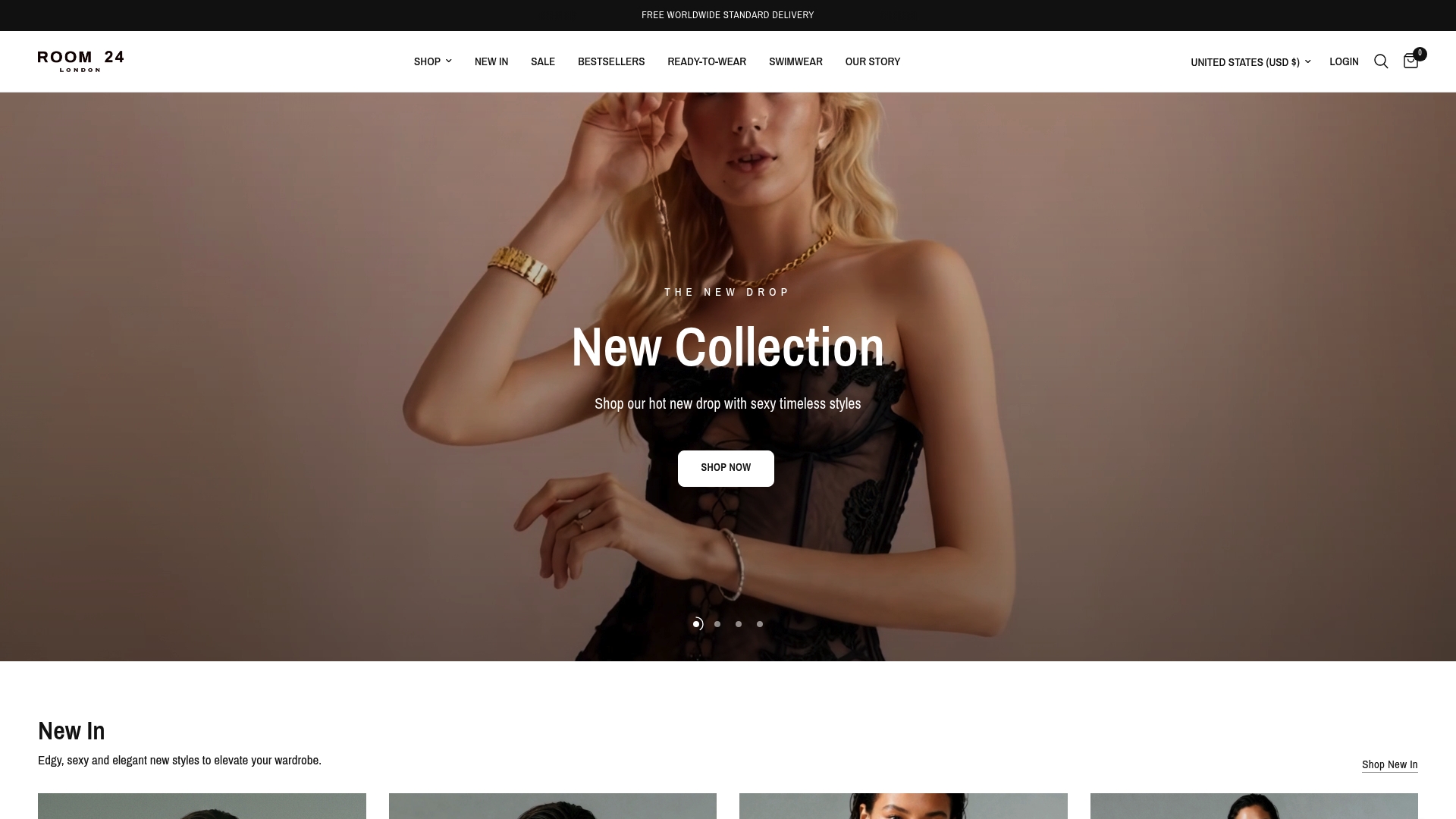
Each product page lists material composition and care instructions. Before you buy, check the fiber type listed and look for any certification notes. If you have a question about a specific garment’s sourcing, Room24’s customer service team can provide supplier documentation. Browse the collections and filter by material notes to find pieces that meet the buying checklist above.
Recommended reading and authoritative sources
These sources back the claims in this article and are worth bookmarking for your own research.
| Source | Focus | What you can verify there |
|---|---|---|
| FTC — “Bamboo” Fabrics | Regulatory | U.S. labeling rules; what “rayon made from bamboo” means legally |
| Lenzing | Manufacturer | Lyocell closed-loop process; solvent recovery data; TENCEL credentials |
| OEKO-TEX | Certification body | Standard 100 scope; how to verify a certificate number |
| Sustainable Jungle — Bamboo Fabric | Investigative guide | Viscose vs lyocell comparison; toxicity overview |
| Tap.eco — Bamboo Fabric Eco-Score | Sustainability scoring | Net eco-score methodology; crop vs processing tradeoffs |
| Ecocult — Bamboo Fabric | Greenwashing analysis | Antibacterial claim scrutiny; marketing vs science |
| TLR Journal — Bamboo Fabric Study | Peer-reviewed research | Moisture management, comfort, and antibacterial test data |
| CDC NIOSH — Carbon Disulfide | Occupational health | Worker exposure risks from viscose solvent use |
| FTC — Greenwashing Guidance | Regulatory | Enforcement standards for environmental marketing claims |
When you land on a brand’s product page, look for a linked certificate number (not just a logo), a named fiber producer, and a care label that matches the fiber type. Those three details together are a reasonable proxy for supply-chain honesty.


