


If you spot sunscreen on fabric, scrape or blot off the excess right away and work in dish soap or liquid laundry detergent before it goes anywhere near a dryer. Heat is what turns a fixable stain into a permanent one, so cold water and patience come first.
The right fix depends on what kind of stain you’re looking at:
- Orange or rust-colored mark? That’s likely avobenzone reacting with metal ions. It needs a mild acid, not more soap.
- White, chalky residue? That’s a mineral sunscreen (zinc oxide or titanium dioxide). Skip the acid entirely and use warm water plus gentle friction.
- Yellow, greasy patch? Standard oily stain. Dish soap and cold water usually handle it.
Key Takeaways
Removing a sunscreen stain successfully depends on acting fast, identifying whether it’s chemical or mineral, and never applying heat before the mark is fully gone.
| Point | Details |
|---|---|
| Act before drying | Blot or scrape excess sunscreen and treat with dish soap before the item ever touches a dryer. |
| Match the treatment to the stain | Orange marks need a short vinegar soak; white, chalky residue needs warm water and mechanical action, not acid. |
| Cap acid exposure on swimwear | Limit vinegar or lemon soaks to five minutes on elastane blends to protect stretch and fit. |
| Never bleach avobenzone stains | Chlorine bleach reacts with avobenzone and darkens the mark instead of removing it. |
| Choose garments built for the routine | Room24 designs swimwear with sustainable, elastane-blend fabrics meant to hold up through cold rinses and gentle repeat washing. |
Table of Contents
- How to Tell Chemical, Mineral, and Greasy Sunscreen Stains Apart
- Pre-Treating Fresh Greasy Sunscreen Stains
- Removing Orange Stains From Chemical Sunscreens
- Getting Rid of Chalky Mineral Sunscreen Residue
- Choosing the Right Wash Cycle and When to Escalate
- What to Do When a Sunscreen Stain Has Already Dried
- Protecting Swimwear While You Treat the Stain
- Preventing Sunscreen Stains Before They Happen
- Confirming the Stain Is Actually Gone
- Why Preserving Fit Matters as Much as Removing the Stain
- Swimwear Built to Handle the Beach and the Wash
- Where to Read More on Stain Removal and Swimwear Care
- Sources
How to Tell Chemical, Mineral, and Greasy Sunscreen Stains Apart
Hold the fabric up to bright light before you touch anything. An orange or rust tint almost always points to avobenzone, the UV filter in most chemical sunscreens, reacting with iron or copper in tap or pool water. A white, powdery residue that sits on top of the fibers rather than soaking in is mineral sunscreen at work, and it needs a completely different approach.
- Check the bottle. Look for avobenzone on the ingredients list (chemical) or zinc oxide/titanium dioxide (mineral).
- Do the feel test. Rub the stain gently between two fingers. Greasy and slick means oil-based. Dry and slightly gritty means mineral.
- Check the care label. Swimsuits with elastane or spandex have much tighter limits on soaking time and water temperature than a cotton t-shirt.
Pro Tip: Photograph the stain and the care label before you start. If a treatment doesn’t work, you’ll remember exactly what you tried and won’t repeat a step that already failed.
Pre-Treating Fresh Greasy Sunscreen Stains
Most sunscreen stains are just oil clinging to fibers, and oil responds to grease-cutting soap the same way it does on a dinner plate. Speed matters more than force here.
- Scrape off any excess lotion with a spoon or the back of a dull knife. Don’t rub.
- Blot the area with a clean cloth. Rubbing pushes oil deeper into the weave instead of lifting it out.
- Apply a grease-cutting dish soap or liquid laundry detergent directly to the stain and work it in gently with your fingers for one to three minutes.
- Rinse from the back of the fabric under cold running water, which pushes the stain out rather than through.
- Repeat once if the mark is still visible.
Laundry experts consistently point to speed as the single biggest factor in successful stain removal, since drying an untreated stain effectively bakes the oil into the fibers. Never machine dry the item until you’ve confirmed the stain is gone.
Removing Orange Stains From Chemical Sunscreens
Avobenzone doesn’t just sit on fabric. It bonds with metal ions in water, and that reaction is what leaves behind the orange or rust-colored mark that plain detergent can’t touch. A mild acid breaks that bond without needing harsh chemicals.
- Mix one part white vinegar to three parts cold water and soak the stained area.
- For swimwear with elastane, limit the soak time to a short period to protect the stretch fibers.
- Lemon juice works as a gentler alternative, though it’s slower.
- A dedicated rust remover can help on stubborn marks, but test it on a hidden seam first.
- Never use chlorine bleach on avobenzone stains. The two react and darken the stain instead of lifting it.
Pro Tip: The Guardian’s household stain guide backs vinegar soaking as a reliable summer fix for sun cream marks, but always check the fabric’s reaction on an inside seam before soaking anything you care about.
Getting Rid of Chalky Mineral Sunscreen Residue
Mineral sunscreens leave behind physical particles, not a chemical stain, so acid is the wrong tool here. Zinc oxide can actually react with acidic cleaners and leave a faint yellow tinge behind, which is the opposite of what you want.
- Rinse the area with warm (not hot) water and massage the fibers with your fingers.
- If residue lingers after a normal wash, use a soft brush or an old toothbrush to dislodge stubborn particles.
- Repeat gentle washes rather than reaching for a stronger chemical treatment.
- Skip bleach and solvent-based stain removers entirely. Mineral residue responds to mechanical action, not chemistry.
Choosing the Right Wash Cycle and When to Escalate
Once you’ve pre-treated the stain, the wash itself matters almost as much. Everyday cotton and synthetics can generally handle the hottest setting your care label allows, but swimwear should stay on cold or lukewarm, full stop.
- Wash oily or greasy stains with an enzyme-based detergent, which breaks down the fats in sunscreen more effectively than a standard formula.
- For white or colorfast fabrics, add sodium percarbonate (oxygen bleach) to brighten without the risks of chlorine.
- If the stain survives a wash, try rubbing alcohol on a cotton pad for oily residue, or a repeat pre-treat cycle before reaching for anything stronger.
- Test any new product, including rust removers, on a hidden seam first.
Vanish’s own UK guidance follows this same order: scrape, pre-treat, wash, then inspect before drying, rather than jumping straight to the strongest product in the cupboard.
What to Do When a Sunscreen Stain Has Already Dried
A stain that’s gone through the dryer once is far harder to shift than one caught fresh, because heat sets the discoloration into the fibers permanently. Don’t compound the mistake by drying it a second time while you troubleshoot.
- Repeat the dish soap or detergent treatment several times before giving up. Persistence works better than escalation here.
- For stubborn oily residue, try dabbing rubbing alcohol onto the stain before a fresh round of soap.
- Silk, wool, and other delicate or dry-clean-only fabrics are not good candidates for DIY acid or alcohol treatments. Take those to a professional cleaner instead.
- If the fabric feels weaker or thinner after treatment, stop. Further attempts risk creating holes rather than saving the garment.
Protecting Swimwear While You Treat the Stain
Swimwear takes more punishment than almost anything else in your closet, between sun, chlorine, and repeated stretching, so the margin for error is smaller. Elastane and spandex blends lose their stretch faster under heat and chemical exposure than most people expect.
- Cap any acid soak at five minutes for suits with elastane. If detergent alone will do the job, skip the acid step entirely.
- Rinse swimwear in cold water immediately after swimming, before the sunscreen has time to bond with pool or seawater minerals.
- Air-dry flat, out of direct sun, rather than hanging it or tossing it in the dryer.
- Never wring, twist, or use fabric softener on swimwear. Softener coats the fibers and actually breaks down elastane over time.
Pro Tip: We cover the full aftercare routine, including how detergent choice affects elasticity over a season of wear, in our guide to washing swimwear.
Preventing Sunscreen Stains Before They Happen
The easiest stain to remove is the one that never lands on fabric in the first place.
- Apply sunscreen 10 to 15 minutes before dressing so it has time to absorb fully into skin.
- Throw on a cover-up while lounging poolside instead of sitting in a swimsuit that’s still catching transfer.
- Rinse swimwear in cold water as soon as you’re done swimming, rather than letting it sit damp in a bag.
- Avoid reapplying sunscreen while already dressed in something delicate. Blot any areas prone to contact instead.
- Store clean, dry garments only, and always follow the care label rather than a one-size-fits-all wash routine.
Confirming the Stain Is Actually Gone
Check the fabric while it’s still damp, under a bright light or near a window. Wet fabric shows residual discoloration far more clearly than dry fabric does, which is exactly why so many stains reappear “out of nowhere” after a wash.
- Only move to the dryer, or lay the item flat to air-dry, once you’ve confirmed the mark is gone.
- Heat sets any trace of avobenzone residue permanently and accelerates wear on elastane fibers.
- When in doubt, air-dry. It costs you a few hours, not a garment.
Why Preserving Fit Matters as Much as Removing the Stain
The instinct with any stubborn stain is to reach for something stronger. Resist it. A vinegar soak that runs ten minutes instead of five might lift an orange mark a little faster, but it also breaks down the elastane that gives a swimsuit its fit, and that damage doesn’t show up until the suit stops bouncing back.

Room24 builds pieces meant to survive seasons of sun and salt water, which only works if care stays conservative. Gentle, repeated treatments beat a single aggressive one nearly every time, and that’s worth remembering before you reach for the strongest thing under the sink.
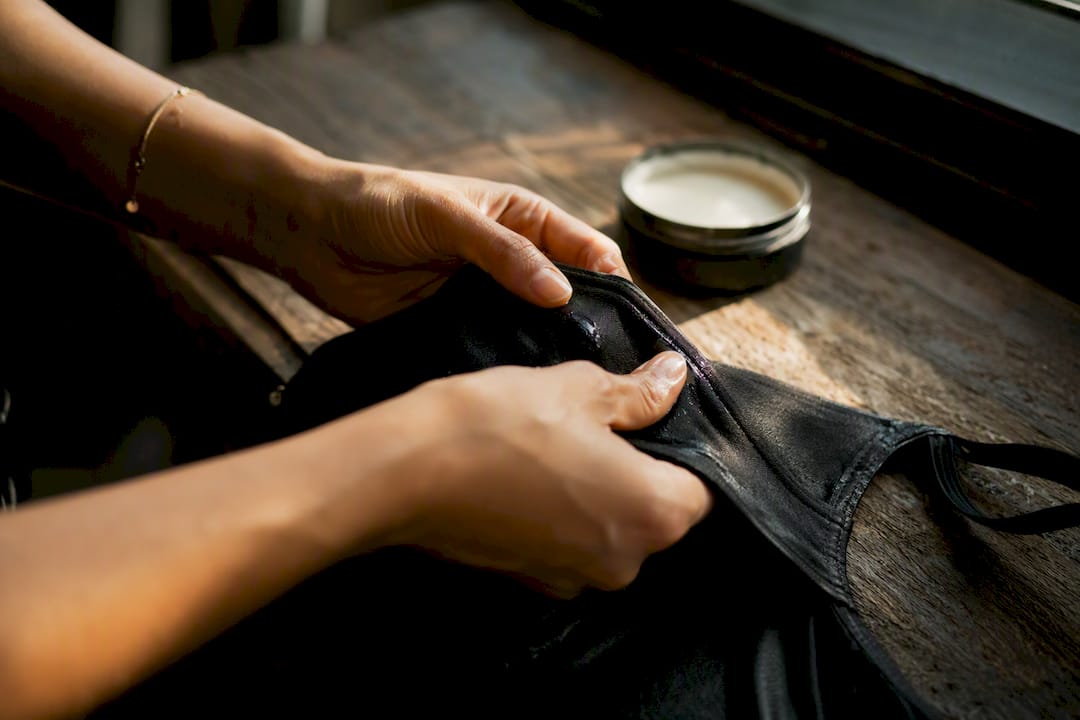
Swimwear Built to Handle the Beach and the Wash
If you’re tired of watching a favorite swimsuit lose its shape after one summer of sunscreen and pool water, the fix often starts before the stain does. Room24 designs swimwear with sculpting fits and sustainable fabrics chosen to hold up under exactly the kind of care this article walks through: cold rinses, gentle detergent, no fabric softener.

Our guide to washing swimwear covers the full aftercare routine in more depth, from drying to storage. If you’re shopping for a new suit that’s easier to keep looking new, browse the Room24 swimwear collection and look for pieces built with elastane blends that can handle real beach days, not just photos.
Where to Read More on Stain Removal and Swimwear Care
For deeper guidance beyond this article, these sources cover the details worth bookmarking:
- Good Housekeeping’s fabric-aware sunscreen stain guide for UK-specific product recommendations.
- The Guardian’s summer stains roundup for household remedies beyond sunscreen.
- Vanish UK’s step-by-step stain guide for product-specific dwell times.
Sources
- How to Get Rid of Sunscreen Stains, According to Laundry Experts
- How to Remove Sunscreen Stains from Clothes and Swimwear - The Clean Tips
- A Guide on How to Get Sunscreen Out of Clothes
- How to remove all four of the most common summer stains - The Guardian
- How to remove sunscreen stains - Good Housekeeping UK


