


Pick the one-piece when you need secure coverage, active-use stability, or a single suit that works from pool to restaurant. Pick a bikini when tanning, mix-and-match sizing, or minimal coverage is the priority. Neither is universally better.
- One-piece: Best for lap swimming, water sports, resort days with multiple stops, and anyone who wants a smoothing, sculpted silhouette without managing separate pieces.
- Bikini: Best for sunbathing, beach lounging, and shoppers who need different sizes on top and bottom.
- Middle ground: A tankini or monokini splits the difference when you want the coverage of a one-piece with the bathroom convenience of a two-piece.
The one-piece swimwear market grew 24% from 2020 to 2025, driven by multi-context resort travel rather than any wholesale retreat from bikinis. Room24 sits squarely in that growth lane, offering sculpting, sustainable one-pieces alongside bikini separates for women who want both options.
Key Takeaways
The most practical rule in the one-piece vs. bikini decision: match the suit to the activity first, then check the fit against your actual measurements before buying.
| Point | Details |
|---|---|
| Activity drives the choice | One-pieces suit active water use and resort transitions; bikinis suit tanning and lounging. |
| Fit is the real variable | Torso length and chest-to-hip ratio matter more than category; measure before buying. |
| One-piece market is growing | The one-piece segment grew 24% from 2020 to 2025, led by resort and multi-context travel demand. |
| Middle-ground options exist | Tankinis and monokinis solve specific fit and coverage problems neither extreme handles well. |
| Room24 for sculpting one-pieces | The Zina, Cara, and Lea One Pieces offer sustainable fabrics and fit notes on each product page. |
Table of Contents
- What makes a bikini the better choice?
- Why a one-piece often earns its place in your bag
- How do they compare across occasions and body shapes?
- How to get the fit right before you buy
- Which style works best for each activity?
- How to style a one-piece or bikini beyond the beach
- What about tankinis, monokinis, and demi-cuts?
- What fabrics and care practices actually matter?
- How Room24 answers common one-piece needs
- A quick five-minute checklist to pick the right suit
- A brand perspective on the one-piece vs. bikini question
- Room24’s one-piece picks for your next trip
- Sources
What makes a bikini the better choice?
Bikinis outperform one-pieces on three fronts: tanning coverage, separate sizing, and packing ease. If any of those matter most to you, the two-piece wins.
Pros:
- Maximum sun exposure on the torso, ideal for even tanning
- Separate top and bottom sizing solves the chest-to-hip ratio problem instantly
- Dries faster than most one-pieces, which matters on back-to-back beach days
- Mix-and-match potential means one trip can yield multiple looks from fewer pieces
- Easier bathroom breaks, no full undressing required
Cons:
- Higher wardrobe malfunction risk during active water use
- Less built-in bust support unless you choose a structured underwire top
- More pieces to track, pack, and potentially lose
- Can feel less polished for pool-to-restaurant transitions
For tanning, the bikini has no real competition. For a beach volleyball game or a kayak session, it starts to show its limits.
| Dimension | Bikini |
|---|---|
| Coverage & support | Low to moderate; depends heavily on top construction |
| Comfort & mobility | High for lounging; moderate for active movement |
| Tanning | Excellent; maximum skin exposure |
| Style & versatility | High; mix-and-match creates multiple looks |
| Sustainability & materials | Varies by brand; look for recycled nylon or ECONYL |
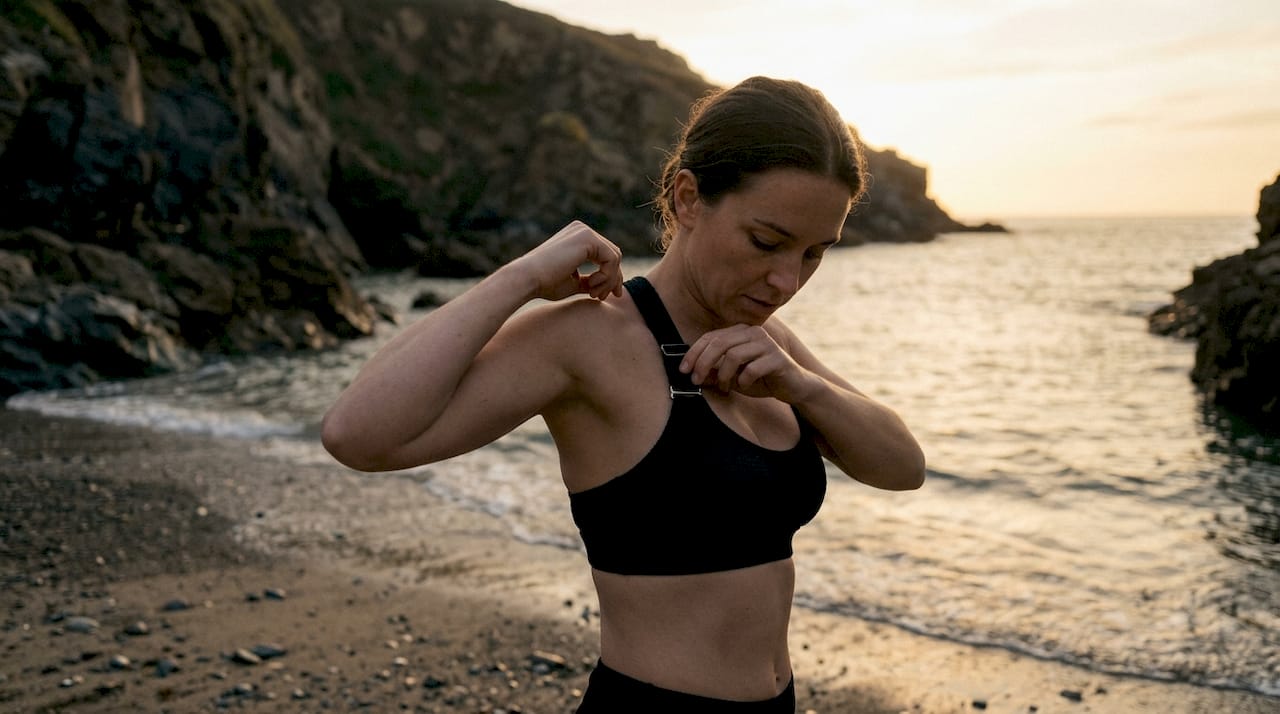
Pro Tip: If you’re planning an active beach day, choose a bikini top with a wide underband and adjustable halter or racerback straps. Molded cups with underwire give significantly more support than a triangle top and reduce the risk of shifting during movement. Room24’s bikini tops collection includes structured options worth checking before you pack.
Why a one-piece often earns its place in your bag
A one-piece suits active, multi-context, or modest-coverage needs better than a bikini in most cases. One-pieces reduce drag in the water and stay put during movement, which is why competitive swimmers and paddleboarders default to them.
Pros:
- Secure fit that doesn’t shift during swimming, surfing, or water sports
- Smoother silhouette that can minimize or accentuate depending on cut
- Transitions from pool to lunch without a cover-up
- Single garment to manage, pack, and rinse
- Better UV protection across the torso
Cons:
- Torso-length fit is the biggest pitfall: a suit cut for a standard torso can gap at the chest or pull uncomfortably if you’re long- or short-waisted
- Less tanning coverage by design
- One size must fit both bust and hips, which creates problems for women with significant size differences between the two
If your chest and hips are more than two standard sizes apart, sizing guidance consistently points to bikinis as the practical fix. A one-piece that fits the bust may pull at the hips, and vice versa. That’s a construction constraint, not a style judgment.
How do they compare across occasions and body shapes?
The honest answer: the right choice depends on what you’re doing that day, not on a fixed rule about body type.
Three quick persona verdicts:
- Active holidayer (paddleboarding, snorkeling, cliff jumping): one-piece, every time. Secure straps and a single-piece construction mean nothing shifts mid-activity.
- Resort diner (pool in the morning, lunch out, afternoon beach): one-piece or a structured bikini with a cover-up. The one-piece wins on transitions.
- Sun worshipper (full day horizontal on a lounger): bikini. Maximum skin exposure, faster drying, easier to adjust.
| Best for | Coverage & support | Flattering for body shapes | Comfort & mobility | Tanning | Style & versatility | Sustainability & materials |
|---|---|---|---|---|---|---|
| Lap swimming / water sports | One-piece: high, stays put | One-piece: smoothing, elongating | One-piece: excellent in water | Bikini: full torso exposure | Bikini: mix looks | Both: recycled fabrics available |
| Sunbathing / beach lounging | Bikini: adjustable coverage | Both: depends on cut | Bikini: lighter in heat | Bikini: best | Bikini: more combinations | Both: check fabric certifications |
| Pool-to-restaurant transitions | One-piece: no extra layer needed | One-piece: sculpting cuts work well | One-piece: single garment | Bikini: better for pre-dinner sun | One-piece: cleaner look | One-piece: easier to find in sustainable lines |
| Family / active beach days | One-piece: secure | One-piece: consistent coverage | Both: depends on cut | Bikini: more exposure | Both: personal preference | Both |
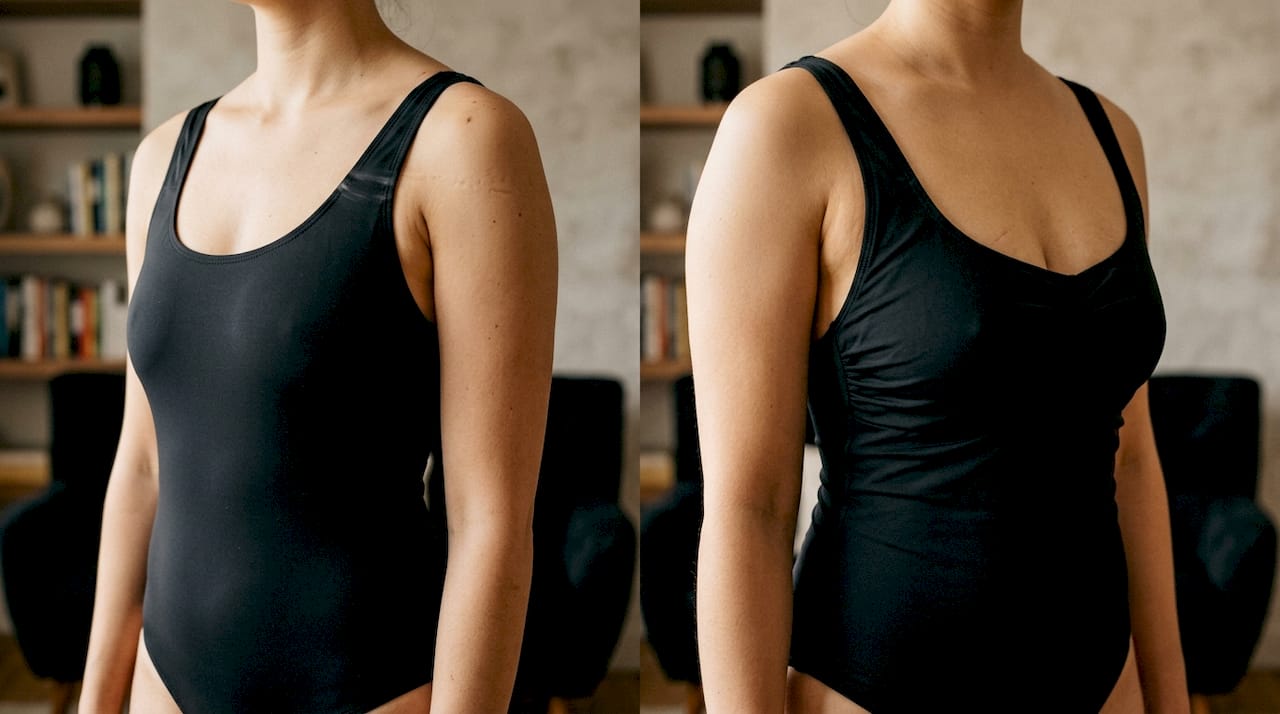
Torso length matters more than most guides admit. A long-torso wearer in a standard one-piece will feel the suit pulling down at the shoulders or gaping at the chest. Short-torso wearers face the opposite: excess fabric that bunches. Choosing by intended use rather than category alone is the practical fix, but so is knowing your torso measurement before you buy.
How to get the fit right before you buy
Measure first, then shop. That order prevents most returns.
What to measure:
- Bust (fullest point, bra on)
- Underbust (directly under the bust)
- Waist (narrowest point)
- Hips (fullest point, usually 8–9 inches below the waist)
- Torso length (shoulder over bust, through the crotch, to the shoulder again at the back)
Your torso length is the number most UK shoppers skip, and it’s the one that causes the most one-piece returns. Measure it with a soft tape while standing, ideally with a friend to hold the tape at the back.
Fit checks once the suit is on:
- Raise both arms above your head. If the suit pulls at the crotch, it’s too short in the torso.
- Sit down. If the chest gapes away from your body, the bust cup is too large or the torso is too long for that cut.
- Bend forward. If the back rides up, the band is too loose or the torso is too short.
Pro Tip: If your bust and hip measurements fall in different size brackets, a bikini with separate bikini bottoms and tops is almost always the better fit solution than forcing a one-piece to span both. Mix-and-match sizing is one of the bikini’s most underrated practical advantages.
UK sizing runs slightly differently across brands. Always compare your measurements to the specific brand’s size chart rather than assuming your usual size translates. Room24 publishes fit notes on individual product pages, which makes this easier than guessing from a generic size guide.
Which style works best for each activity?
Match the suit to what you’re actually doing. Here’s a direct activity-by-activity guide:
- Lap swimming: One-piece. Less drag, no risk of a top shifting mid-stroke. A racerback or cross-back strap keeps everything in place.
- Paddleboarding or kayaking: One-piece. You’re rotating your torso constantly; a bikini top can shift or loosen with paddle movement.
- Beach volleyball: One-piece or a secure sports bikini with a wide underband. Triangle tops are not suitable here.
- Snorkeling or diving: One-piece. You’re face-down in the water; a bikini bottom can ride up or shift when you kick.
- Lounging and tanning: Bikini. Adjust straps, untie, reposition. Maximum flexibility.
- Family beach days: One-piece. Chasing kids in the surf is not the moment for a string bikini.
- Boat or yacht days: One-piece or a structured bikini. Wind, waves, and sudden movement favor a more secure fit.
- Pool-to-restaurant transitions: One-piece. Throw on a cover-up or a linen shirt and you’re done. A bikini requires more layering to look intentional.
For high-movement activities, look for wide straps, a firm underband, and a higher-cut leg. Thin spaghetti straps and triangle cups are styling choices, not performance ones.
How to style a one-piece or bikini beyond the beach
Both silhouettes extend well past the water’s edge with the right layering. A one-piece worn as a bodysuit under high-waisted trousers is a full outfit. A bikini top under a blazer is a resort dinner look that actually works.
Practical styling ideas:
- Layer a one-piece under wide-leg linen trousers for a pool-to-town look
- Pair a bikini top with a midi wrap skirt and sandals for a beach-bar outfit
- Add a sheer sarong over a one-piece for a covered-up beach walk
- Wear a one-piece as a bodysuit under tailored shorts for a resort-casual daytime look
- Throw an oversized linen shirt over a bikini for a breezy, effortless beach cover-up
- Stack simple gold jewelry over a one-piece for an evening-ready resort look
- Use a cover-up kaftan over either style for the transition from sand to street
Pro Tip: Sunscreen is the biggest enemy of swimwear color. Apply SPF at least 10 minutes before putting on your suit, and rinse the suit in cold water immediately after wearing. Lay it flat in the shade to dry rather than hanging it, which stretches the fabric over time. Avoid wringing the suit out; press the water out gently instead.
Care matters as much as styling. Chlorine and salt water both degrade elastane faster than UV exposure alone, so rinsing after every wear is the single highest-impact habit for extending a suit’s life.
What about tankinis, monokinis, and demi-cuts?
These three options sit between a bikini and a one-piece and solve specific problems neither extreme handles well.
Tankini: A two-piece where the top extends to the hip or below, giving one-piece-level torso coverage with bikini-style bathroom convenience. Best for women who want coverage without the torso-length fit constraints of a one-piece. If you frequently find one-pieces too short or too long in the body, a tankini sidesteps the problem entirely.
Monokini: A one-piece with strategic cutouts, usually at the sides or midriff. Gives the visual effect of a two-piece with the security of a single garment. Best for women who want tanning lines closer to a bikini’s without sacrificing the structural support of a one-piece.
Demi-cut: A one-piece or bikini bottom cut higher on the hip than a standard suit, elongating the leg line. Best for petite frames or anyone who wants a longer-leg visual effect without changing the suit’s overall coverage level.
- Tankini wins when: you have a long torso, need frequent bathroom access, or want mix-and-match sizing with more coverage
- Monokini wins when: you want cutout styling without managing two pieces
- Demi-cut wins when: leg-lengthening proportion is the priority
What fabrics and care practices actually matter?
Choose swimwear by fabric first, then by cut. The fabric determines how long the suit lasts, how it feels in UK sea temperatures, and whether the color survives a season.
Common swimwear fabrics:
- Recycled polyester (rPET): Made from reclaimed plastic bottles or ocean waste. Durable, holds color well, and dries quickly. The most common sustainable option in mid-to-high-end swimwear.
- ECONYL (recycled nylon): Regenerated from fishing nets and industrial waste. Softer than rPET, with excellent stretch recovery. Used by brands positioning in the sustainable premium segment.
- Standard nylon/elastane blends: Soft and stretchy, but not sustainable unless certified. Degrades faster in chlorine than polyester blends.
- Polyester/elastane blends: The workhorse of swimwear. Chlorine-resistant, shape-retaining, and widely available. Less soft than nylon but more durable.
Care steps that actually extend a suit’s life:
- Rinse in cold fresh water immediately after salt water or chlorine exposure
- Press water out gently; never wring or twist
- Lay flat in the shade to dry; avoid direct sunlight while wet, which fades color and breaks down elastane
- Use a gentle, pH-neutral detergent or a dedicated swimwear wash
- Never tumble dry or iron
When reading sustainability claims, look for OEKO-TEX Standard 100 certification (confirms no harmful chemicals in the fabric) or GRS (Global Recycled Standard) certification (confirms the recycled content claim). Vague terms like “eco-friendly” or “conscious” without a named standard are marketing language, not verified claims.
Room24’s product pages include material and care details at the individual product level, which makes it straightforward to verify what a specific suit is made from before buying.
How Room24 answers common one-piece needs
Room24 focuses on sculpting, sustainable swimwear with signature cut-outs and structured fits, designed for women who want a one-piece that works as hard as it looks. The brand’s one-piece collection covers a range of needs without sacrificing the aesthetic.
Three pieces worth knowing:
- Zina One Piece: A sculpting silhouette with cut-out detailing. Best for women who want the security of a one-piece with the visual interest of a two-piece. The cut-out placement elongates the torso rather than breaking it.
- Cara One Piece: Structured support with a cleaner, more minimal line. A strong choice for pool-to-restaurant transitions where you want the suit to read as an outfit, not just swimwear.
- Lea One Piece: A resort-ready cut with a higher leg and a fitted bodice. Works well for petite-to-average torso lengths and creates a strong leg-lengthening effect.
Room24 publishes fit notes and material details on each product page, so you can cross-reference your torso measurement against the specific cut before ordering. For women with a longer torso, the Zina’s construction tends to accommodate better than standard-length cuts.
Pro Tip: Before adding any one-piece to your cart, check the product page’s fit notes against your torso measurement. A suit that fits your bust and hips but is 2 cm short in the torso will pull uncomfortably all day. Room24’s product detail pages make this check straightforward.
A quick five-minute checklist to pick the right suit
One sentence up front: if you’re still undecided after reading this far, run through these six questions and the answer will be clear.
- What’s the primary activity? Lap swimming, water sports, or multi-stop resort days point to a one-piece. Pure sunbathing or beach lounging points to a bikini.
- How much bust support do you need? If you need significant support, a one-piece with built-in structure or a bikini with underwire and a wide underband are both viable. A triangle top is not.
- What’s your torso length? Measure it. If it falls outside the standard range for the brand you’re considering, a bikini or tankini avoids the fit problem entirely.
- Is tanning a priority? If yes, bikini. A one-piece covers the torso by design.
- How much do you want to pack? One-piece wins on packability: one garment, less bulk, faster to rinse and dry.
- What’s your budget? A quality one-piece in sustainable fabric costs more upfront but replaces two separate pieces. Compare cost-per-wear rather than sticker price.
Try-on tests before you commit:
- Raise both arms: no crotch pull means the torso length is correct
- Sit down: no chest gape means the bust cup fits
- Bend forward: no back ride-up means the band is firm enough
Immediate red flags: visible gaping at the chest, fabric pulling across the hips, straps that dig in at rest, or a crotch seam that sits off-center. None of these improve with wear.
Before checkout, compare your measurements to Room24’s size chart on the specific product page. The fit notes there are specific to each cut, not generic across the collection.
A brand perspective on the one-piece vs. bikini question
The one-piece vs. bikini debate gets treated as a body-type question more often than it should be. The more useful frame is occasion and construction. A well-built one-piece in the right torso length does things a bikini simply cannot: it stays put, it transitions, and it creates a silhouette that reads as intentional rather than assembled. That’s why Room24 leans into one-pieces as a design priority, not because bikinis are lesser, but because the one-piece has more room to do something architecturally interesting.
That said, the bikini’s case for separate sizing is real and practical. Women with significant differences between their bust and hip measurements are genuinely better served by two pieces. Respecting that means not pretending one silhouette fits every body or every day. The honest answer is always: match the suit to the plan, measure before you buy, and don’t accept a fit that requires constant adjustment.
Room24’s one-piece picks for your next trip
If you want a secure, sustainable one-piece that works from the pool to the restaurant, Room24’s collection is worth a close look. The brand’s focus on sculpting cuts and recycled fabrics means you’re not choosing between looking good and buying responsibly.
Three picks mapped to specific needs:
- Zina One Piece: For women who want cut-out styling with one-piece security. The structured bodice and elongating cut-out make it the most resort-versatile option in the range.
- Cara One Piece: For clean, minimal lines and easy pool-to-lunch transitions. Less visual noise, more wearability across contexts.
- Lea One Piece: For petite-to-average torso lengths and a strong leg-lengthening silhouette. The higher leg cut does real work on proportion.
Browse the full Room24 swimwear collection to compare cuts, check fit notes, and find the one-piece that matches your torso length and activity plan before your next trip.
Sources
- One-Piece vs. Bikini: When to Wear Which (2026 Resort Wear Guide) – CURATED SENSE
- Swimoutlet
- One-Piece vs Bikini: How to Choose
- Swimsuit vs. Bikini: What’s the Difference? July 2026


