


The main bikini bottom styles you’ll find on any rack are high-waist, hipster/low-rise, high-leg, cheeky/Brazilian/thong, tie-side, classic brief, swim shorts/skirts, and fold-over. Picking between them comes down to three things: coverage, rise, and leg cut, and how those three line up with what you actually want to show or smooth. Get that trio right and the cut works with your shape instead of against it.
- High-waist: covers the tummy, smooths the middle
- Hipster/low-rise: sits below the belly button, balances a longer torso
- High-leg: cuts up toward the hip, visually lengthens legs
- Cheeky/Brazilian/thong: shows more of the seat, minimal hip coverage
- Classic brief: even, full coverage front and back
Key Takeaways
Choosing the most flattering bikini bottom comes down to matching coverage, rise, and leg cut to your body goal, not to chasing whichever style trends this season.
| Point | Details |
|---|---|
| Three axes decide fit | Coverage, rise, and leg cut combine to shape how any bottom looks and feels on you. |
| High-leg lengthens legs | A V-cut leg opening visually stretches the leg line more than a classic straight cut. |
| High-waist smooths the middle | Rise sitting at or above the navel gives the most tummy coverage of any style. |
| Fit test before you buy | Sit, squat, and check the waistband before deciding a bottom actually works. |
| Room24 offers reversible options | Room24’s reversible bottoms use recycled fabric blends and let one piece serve two looks. |
Table of Contents
- What Are the Main Bikini Bottom Styles?
- How Do You Choose the Most Flattering Bikini Bottom?
- Fabric, Fit, and Care: What Actually Makes a Bottom Last
- Room24’s Take on Reversible, Sustainable Bottoms
- Shop Room24’s Bikini Bottoms and Reversible Styles
- Sources
What Are the Main Bikini Bottom Styles?
Every named style you see on a swimwear site is really just a combination of three variables in different proportions: how much fabric there is, how high it sits, and how the leg opening is cut. Once you can spot those three, you can decode almost any bottom without needing a glossary.
Tie-side bottoms fasten at the hip with string ties, which makes them adjustable and easy to loosen or tighten through the day. Coverage tends to be medium, and because the tie can shift, they’re not the most secure choice for bodysurfing or paddleboarding.
Classic brief is the benchmark full-coverage cut: straight leg lines, generous seat coverage, no surprises. It’s the style most people picture when someone says “bikini bottom,” and it flatters almost every shape because it doesn’t try to do anything clever.
Hipster or low-rise bottoms sit a few inches below the navel and are cut wider through the hip. They shorten the visual distance between waist and thigh, which helps balance a longer torso, though the trade off is less tummy coverage than a high-waist cut.
High-waisted styles sit at or above the navel and often extend toward the ribs. This is the go-to for anyone who wants smoothing through the midsection, and it pairs naturally with a retro or 1950s silhouette. The catch is that a high-waist cut that’s too tight can dig in when you sit down, so check the stretch before you commit.
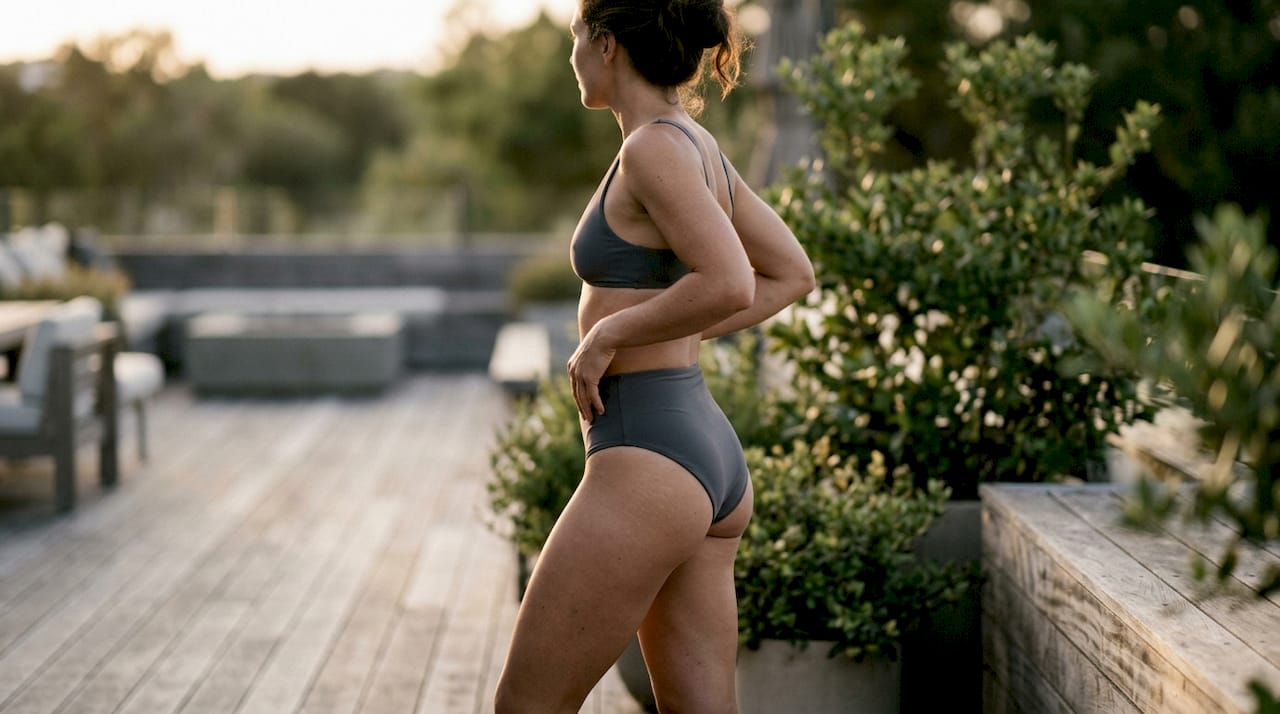
High-leg (V-cut) bottoms angle sharply upward at the hip, exposing more of the upper thigh. According to Cosmopolitan’s bikini bottom style guide, this cut elongates the leg line, and it was popularized in the 1980s before making a steady comeback. Younger shoppers tend to lean toward the high-cut look, while shoppers wanting more coverage often stick with a classic or hipster line.
Cheeky, tanga, Brazilian, and thong all describe reduced rear coverage, but the difference is in degree. Cheeky shows a little more cheek than a classic brief; Brazilian shows more still; a thong or G-string leaves most of the seat bare. They group together because the front cut is often nearly identical. Only the back coverage changes.
Swim shorts and skirts trade skin exposure for coverage and movement ease, useful for beach volleyball, paddling, or simply not worrying about the cut riding up. Fold-over waistbands roll down for a lower rise or up for extra tummy coverage, giving one bottom two different looks. Boyshorts borrow from underwear silhouettes with a straighter, longer leg line and full coverage front and back.
Coverage scales help make sense of all this. JOLYN’s swimsuit coverage guide rates bottoms from 1 (slim, minimal coverage) to 5 (full coverage built for swimming laps), which is a useful shorthand when a product description alone doesn’t tell you enough.
Watch for crossover. A high-waist bottom is very often also high-leg. A tie-side bottom is very often also cheeky. Don’t expect the categories to stay in neat lanes.
How Do You Choose the Most Flattering Bikini Bottom?
Once you understand the three axes, coverage, rise, and leg cut, choosing gets a lot less confusing. Coverage runs from full brief through cheeky to Brazilian and thong. Rise runs high to mid to low. Leg cut runs from a sharp high-cut V down to a classic straight line. Every bottom on the market is a combination of those three settings.
Match the combination to what you’re actually trying to achieve:
- Tummy smoothing: high-rise plus full or medium coverage.
- Longer-looking legs: high-leg cut, any rise.
- Balancing wider hips: classic or high-waist with a straighter leg line, avoiding side straps that cut in at the widest point.
- Lift and shape for a fuller seat: cheeky or Brazilian coverage with ruching, which adds visual dimension without extra fabric.
Before you buy, run through a quick checklist, in-store or trying items on at home in front of a full mirror:
- Sit down. A good bottom shouldn’t dig in or ride up when you bend.
- Do a squat or lunge test to check the fabric holds its shape under movement.
- Check the waistband for rolling or gapping at the hip.
- Look for visible panty lines through the leg opening.
- Check the gusset lining lies flat rather than bunching.
Pro Tip: If a bottom fits everywhere except one spot, look for adjustable features before you give up on it. Side ties let you loosen or tighten the hip, ruched panels add a little give at the seat, and a fold-over band lets you wear the same bottom higher or lower depending on the day.
Fabric, Fit, and Care: What Actually Makes a Bottom Last
The cut gets you excited, but the fabric and construction decide whether the bottom still looks good after ten wears. An 80% nylon, 20% spandex blend is common because it balances stretch recovery with shape retention, while polyester-spandex blends tend to resist chlorine and hold color better over repeated pool use, a difference worth knowing if you swim laps rather than lounge poolside.
Before buying, check the construction, not just the print:
- Double lining, so the fabric doesn’t go sheer when wet
- Strong, tightly stitched elastic at the leg and waist openings
- Bonded or flat-locked seams that won’t chafe
- A gusset lining that sits flat rather than bunching
- Secure side tabs or ties that won’t slip mid swim
Rinse bottoms in cool water after every wear, whether that’s ocean, pool, or hot tub, and skip the harsh detergents and the dryer; air drying out of direct sun keeps elastic and color intact far longer. If you’re shopping online, check the size guide and return policy before you buy, since fit varies more between brands in swimwear than almost any other clothing category. Look for labels like Oeko-Tex or recycled polyester content if a lower environmental footprint matters to your purchase.
Room24’s Take on Reversible, Sustainable Bottoms
Reversible bikini bottoms solve a real problem: one piece, two prints, which means fewer items in your suitcase and less pressure on your wardrobe’s footprint. Room24 builds several of its bikini bottoms around this idea using recycled fabric blends.
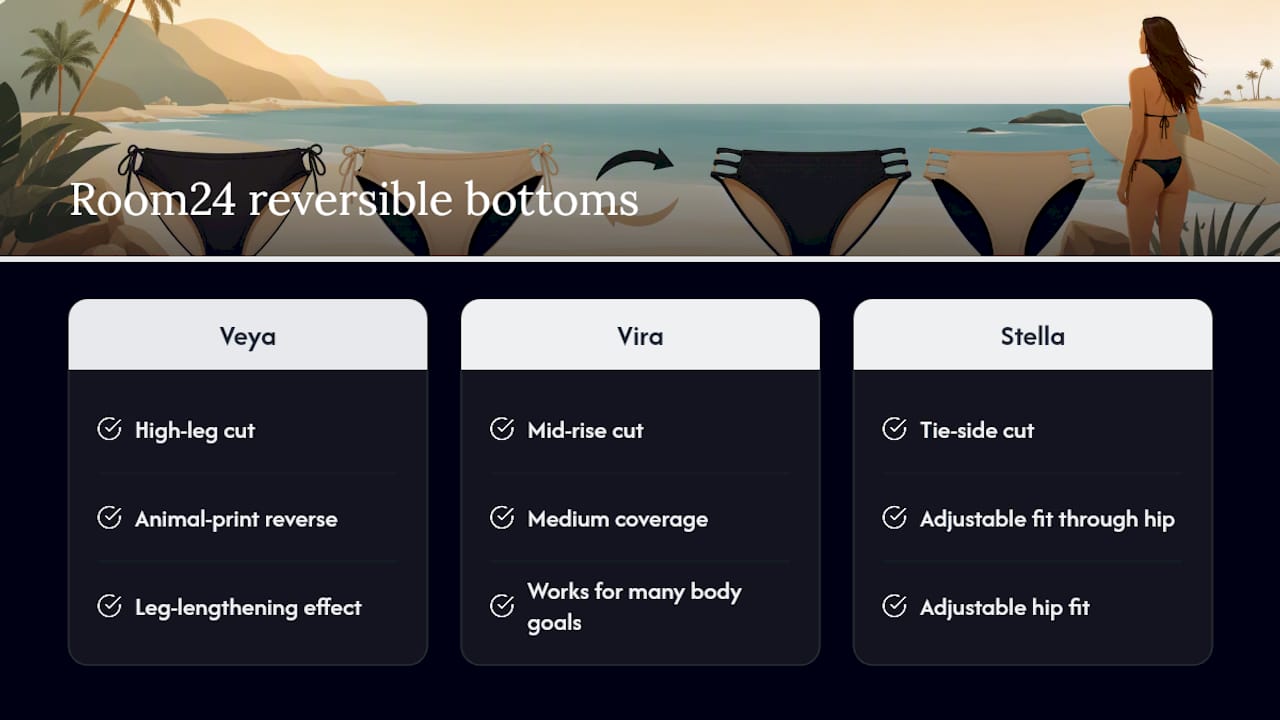
The Veya Reversible Bottom gives you a high-leg cut on one side and an animal print on the reverse, good for anyone chasing that leg-lengthening effect. The Vira Reversible Bottom sits in a mid-rise, medium-coverage zone that works for most body goals without committing to one look. The Stella Reversible Bottom leans tie-side for adjustable fit through the hip.
Pro Tip: Buy one reversible bottom and pair it with two solid tops from Room24’s bikini tops collection. You get four visual combinations out of three pieces.
A Designer’s Quick Rule for Cuts
Sort out rise and waistband comfort before you obsess over how much cheek coverage a bottom gives you; comfort is what you actually notice by hour three at the beach. The most common mistake is buying a high-leg cut for the look and finding it digs in at the hip when you sit, so always do the sit-down test before checkout.
Shop Room24’s Bikini Bottoms and Reversible Styles
Room24 is built for exactly the shopping problem this guide just walked through: matching coverage, rise, and leg cut to your actual body goals, without buying five bottoms to find the one that works. Every style in the swimwear collection is made with recycled fabric blends and construction details like secure linings and strong elastics, so the fit holds up past the first few wears.

If you’re unsure where to start, check the bikini bottoms page and filter by rise and coverage rather than print first. Room24’s size notes are based on hip and waist measurement, not just dress size, so measure before you order rather than guessing from your usual number. Pair any bottom with a piece from the bodysuits range for cover-up versatility beyond the beach, and check the fit notes on each product page before you check out.
Sources
- The Complete Guide to Bikini Bottom Types (Coverage & Fit Explained) - MLY
- A fashion editor’s guide to every bikini bottom style - Cosmopolitan
- Swimsuit Coverage Guide - Cheeky to Full | JOLYN


